The America Flag with Thirteen Stars (one star for each state in the Union,) and the Declaration of Independence that proclaimed the creation of the United States of America. AI Image Enhanced
By Bruce McWhirk, July 4, 2024
America first celebrated the Fourth of July in Philadelphia in 1777. It was the one-year anniversary of Independence Day, when the Continental Congress signed the Declaration of Independence. The glorious events in that city surrounding the celebration of the nation’s first birthday created a precedent and tradition which continues to the present-day throughout the nation.
On July 5, 1777, the Philadelphia Evening Post carried the following story describing the Independence Day festivities:
“P H I L A D E L P H I A
“Yesterday, the 4th of July, being the Anniversary of the Independence of the United States of America, was celebrated in this city with demonstrations of joy and festivity. About noon all the armed ships and gallies in the river were drawn up before the city, dressed in the gayest manner, with the colours of the United States and firearms displayed. At one o’clock, the yards being property manned, they began the celebration of the day by a discharge of thirteen cannon from each of the ships, and one from each of the thirteen gallies in honor of the Thirteen United States.
“In the afternoon an elegant dinner was prepared for Congress, to which were invited the President and Supreme Executive Council and Speaker of the Assembly of this state, the General Officers and Colonels of the army, and strangers of eminence, and the Members of the several Continental Boards in town.
General Von Knyphausen’s Hessian band was captured by General George Washington and the Continental Army at The Battle of Trenton on the 26th of December 1776 and it played celebratory music in Philadelphia to honor the first birthday of the United States of America. (illustration: Hesse-Kassel Abbildung derer uniformen von dem hochfürstl. Hess. Casselischen Militär – 52 Plates (possibly 1780s). AI Image Enhanced.
***
“The Hessian band of music, taken in Trenton the 26th of December last, attended and heightened the festivity with some fine performances suited to the joyous occasion, while a corps of British deserters taken into the service of the Continent by the State of Georgia, being drawn up before the door filled up the intervals with feux de joie [French: fires of joy]. After dinner a number of toasts were drank, all breathing independence, and a generous love of liberty, and commemorating the memories of those brave and worthy patriots who gallantly exposed their lives, and fell gloriously in defence of freedom and the righteous cause of their country.
“Each toast was followed by a discharge of artillery and small arms, and a suitable piece of music by the Hessian band.
Fireworks over a Sailing Ship. (photo: Shunyu Fan) AI Image Enhanced
***
“The glorious fourth of July was reiterated three times, accompanied with triple discharges of cannon and small arms, and loud huzzas that resounded from street to street through the city.
Continental and state troops perform a feu de joie (“fire of joy.”) Cannon smoke rises in the background, and a roar of muskets fire across the Grand Parade, as they celebrate the first anniversary of The Declaration of Independence. (artist: Ed Vebell, drawing: National Park Service). AI Image Enhanced
***
“Towards evening several troops of horse, a corps of artillery, and a brigade of North-Carolina forces, which was in town on its way to join the grand army, were drawn on Second-street, and reviewed by Congress and the General Officers.
“This eyewitness sketch shows Continental Army’s North Carolina Brigade, its soldiers and camp followers, marching through Philadelphia on Aug. 25, 1777, on their way to join General George Washington’s main force south of Philadelphia. Pierre Eugène du Simitière (1737-1784), a Swiss artist and collector who resided in Philadelphia during the Revolutionary War, inscribed on this drawing: “an exact representation of a waggon belonging to the north carolina brigade of continental troops which passed thro Philadelphia… Du Simitière also created from-life profile portraits of prominent Revolutionary leaders including Washington and he suggested the motto ‘E Pluribus Unum’ through his rejected design for the Great Seal of the United States in 1776.”; Caption and drawing, ink on paper: Museum of the American Revolution. AI Image Enhanced
***
“The evening was closed with the ringing of bells, and at night there was a grand exhibition of fireworks, (which began and concluded with thirteen rockets) on the Commons, and the city was beautifully illuminated. Everything was conducted with the greatest order and decorum, and the face of joy and gladness was universal.
“Thus may the fourth of July, that glorious and ever memorable day, be celebrated through America, by the sons of freedom, from age to age till time shall be no more. Amen, and amen.”
The Fourth of July celebrated in Philadelphia, Philadelphia Evening Post, 05 Jul 1777, p. 3
HOW “THE ARMY OF TWO” – THE BATES SISTERS – SAVED SCITUATE HARBOR, MASSACHUSETTS, U.S.A. DURING THE WAR OF 1812
Rebecca Bates (left) and Abigail Bates (right) playing fife and drum. (illustration: New England Historical Society)
“All warfare is based on deception. Hence, when we are able to attack, we must seem unable; when using our forces, we must appear inactive; when we are near, we must make the enemy believe we are far away; when far away, we must make him believe we are near.”
― Sun Tzu, The Art of War
***
A CLEVER RUSE AND DARING DO
Two American sisters, Rachel and Abigail Bates, concocted a clever ruse which prevented a raiding party from a Royal Navy frigate H.M.S. La Hogue from landing ashore at the village Scituate Harbor, Massachusetts during the War of 1812. Their imagination and daring do demonstrate the power of deception in warfare; their story demonstrates the validity of Sun Tzu’s timeless message: “All warfare is based on deception.”
***
CAPTAIN SIR THOMAS BLADEN CAPEL AND HIS FLAG SHIP:
THE ROYAL NAVY FRIGATE H.M.S. LA HOGUE
H.M.S. La Hogue, a 74-gun frigate, third-rate ship of the line of the Royal Navy, was built and launched in 1811 at Depford, England. (painter: William Clark: painting: Glasgow Life Museums)
***
Captain Sir Thomas Bladen Capel served as one of the Royal Navy’s star frigate captains. He was the youngest son of William, fourth Earl of Essex, and a favorite of Admiral Horatio Nelson. He had distinguished himself during the French Revolutionary War and the Napoleonic Wars.
During the Battle of Trafalgar in 1805, Captain Capel commanded the British frigate, H.M.S. Phoebe, and his mission was to repeat signals and stand ready by to assist any vessel in the Fleet; his warship took no part in the fighting. During the gale that followed the battle, ‘by extraordinary exertions’ Captain Capel’s Phoebe helped save the French prize Swiftsure (not to be confused with the British ship bearing the identical name) from destruction.
Upon its launch, Captain Capel, then thirty-five years old, was appointed master and commander of new frigate H.M.S. La Hogue in 1811. The ship was a 74-gun frigate that carried a crew of approximately 470 able-bodied seamen also commonly called “Jack Tars” or “Tars.”.
The victory of the U.S.S. Constitution over H.M.S. Guerriere in a fierce sea battle off of Halifax Nova Scotia, Canada, the previous year had stunned the British Admiralty in London, and it prompted the First Naval Lord to send reinforcements.
On January 9, 1813, Captain Capel and his 74-gun flagship La Hogue, along a squadron of Royal Navy frigates under his command, sailed for North America; they patrolled and largely controlled and dominated the Northeastern coastal waters of the United States for the remainder of the War of 1812.
The Ipswich Journal (Ipswich, England) reported:
“At length it is determined to increase the naval force on the Halifax station, with ships large enough to cope with the American frigates. Orders, it is said, have been given for an examination of several 74’s, for the purpose of selecting such as may be reduced to 64-gun ships…
“The complement of an English 74 is 500 men, but seldom is there on board, even in the home stations, more than from 460 to 480, and of these, generally about 30 are foreigners, and about 60 are boys. The United States, in the recent engagement, had a complement of 478 men; that is 12 less than the nominal complement of our 74’s, and at least equal to the number that any 74 actually has on board. But a consideration of by far greater consequence than the quantity of men, is their quality. From the extended state of the British navy, it is impracticable to man our fleets with seamen. About 6-7ths of every ship’s company are landmen; and thus in a 74, there are seldom more than 70 hands that can be put upon the forecastle or rated able.
“Now the Americans, having but few national vessels, are able to man their ships, not only entirely with sailors, but with picked choice sailors; and they have been but too successful in enticing some of our ablest hands to become their petty officers. It must not, however, be imagined that, with equal force, we could effect our conquests over the Americans so easily as we have been accustomed to effect them over the French. At the beginning of last war, our naval triumphs were often precarious, and always dearly purchased. It was not until the seamen of the continent, by being so long blockaded in their ports, had been disused to their element, that our victories were achieved with so much facility. It is now far otherwise with the American seamen, they have been long in the habit of cruizing and practising naval evolutions and tactics, and nearly one half of their crews are British sailors, and, what is of nearly as much consequence, the other half have been bred up and formed in the British navy…”
Wednesday’s Post, Ipswich Journal, Ipswich England, 09 Jan 1813, p. 4
***
H.M.S. LA HOGUE CROSSES THE ATLANTIC OCEAN
Details from the H.M.S. La Hogue’s Ship’s Log present the frigate’s close to six-week passage across the Atlantic Ocean from Portsmouth England to Halifax, Nova Scotia:
In early January 1813 La Hogue was lying in port at Portsmouth. On the 5th, she made preparations for the Atlantic crossing and started to take on Stores which included:
“Tobacco – 1225 pounds
Bread – 28,000 pounds in bags
Wine – 1386 Gallons
Rum – 1275 gallons
Lemon Juice – 3528 gallons
Butter – 3300 pounds
and, the day before sailing, 13th January,
Water – 222 tons”
“During this time, while the ship was being outfitted: sailors were making new hammock cloths, crew were variously employed about the rigging; top gallant masts were fitted; and, previously, the artificers had been careening the ship in order to repair the copper-lined hull.
“14th January. Set Sail from Spithead.
15th January. Squadron, H.M.S. Valiant and H.M.S. Prevoyant, in company.
16th January. Eddystone Lighthouse.
17th January. The Lizard (Cornwall, England). Lat.49.40. Long. 5.43.”
“Details of the ship’s course, changes in weather conditions, and setting of the sails were recorded in the Log:
“19th January. Fresh breezes and squally. Set the jib. 4th Dog Watch.
Squadron in company. 6.30. Out third reef of topsails.
Set fore and main top gallant sails, main top staysail.
7.35. A stranger on the bow. 8th Dog Watch. Set top gallant stud sails. 8.10. Carried away main top gallant stud boom. 10.15. Out second reef of fore and mizzen topsails. Set staysails, top and top gallant stud sails and spanker.”
“Many other ship’s activities were entered in the Log:
“24th January. Mustered ships company and read The Actions of War (more commonly called The Articles of War).
28th January. Calm and cloudy weather. Distance run 34 miles.
31st January. Strong gales, squally. Distance run 206 miles.
11.00. Observed Valiant carry away her fore topmast and fire gun with blue light.
11.30. Got new foretop studsail boom up.
12.03. Lowered a boat to pick up a spar.
6th February. Waiting for Prevoyant to come up.
8th February. Punished with Cat ‘O Nine Tails: Jas Barratt, 24 lashes for striking a sergeant, John McNabb, 24 for insolence, Thos Flyn, 24 for striking a man, Charles Clark, 24 for disobeying orders.
11th February. Sailmakers making windsails out of canvas drawn for making maindeck awning, the studsail lost overboard. Carpenters making studsail yards. Armourer in the forge.
17th February. Lowered boat to try current. Found it set N. by W.
“The voyage of some 3000 miles had taken one day short of six weeks.
“After taking on fresh food and water at Bermuda, La Hogue set sail across the shipping lanes to Halifax, Nova Scotia, in company with three other ships. An amusing entry in the Log during this stay read ‘8th March. Found missing Instructor Emmanuel, supposed to have lowered himself and swum ashore.’ Two days out it was noted ‘People employed washing their clothes’ and four days out ‘Main staysail split. Hauled down to repair.’
“The Royal Navy squadron then entered the shipping lanes. On 17th March a strange Brig was sighted and Valiant gave chase. The next day La Hogue hove to and sent a boat to board a schooner. On 19th March they sighted Cape Sable Light, the southernmost tip of Nova Scotia at 9 miles to the Northwest and soon afterwards boarded the American Brig Silkworm bound from Lisbon to Boston.”
Quoted from “John William Disney, Midshipman and Irish Crewman – aboard H.M.S. La Hogue; born 29th February 1799 – Died 23rd March 1813.” (familysearch.org)
***
FEARSOME SIGHT: British Seaman, Royal Marine and a Royal Navy Officer, commander of a Ship of the Line, 1805. (United Kingdom postage stamps)
***
CAPTAIN SIR THOMAS BLADEN CAPEL’S WARTIME MISSIONS
Once Captain Sir Thomas Bladen Capel arrived on station at Halifax, Nova Scotia, he commanded H.M.S. La Hogue and assumed the duties of serving as senior officer directing a newly formed squadron of five Royal Navy’s warships that monitored the Northeast Coast of the United States. With H.M.S. La Hogue, Captain Capel’s squadron consisted of another four ships: H.M.S. Shannon, H.M.S. Nymphe, H.M.S. Rattler and H.M.S. Tenedos. The British squadron was active and interdicted and harassed American ships, pursued U.S. Navy frigates based in New London and enforced the blockade of American ports. In particular, La Hogue was involved in the capture and detainment of several American and foreign commercial vessels.
***
JUNE 1, 1813 H.M.S. SHANNON CAPTURES U.S.S. CHESAPEAKE: “THE BATTLE OF BOSTON HARBOR”
By far, the greatest victory of Captain Capel’s Royal Navy squadron was frigate H.M.S. Shannon’s defeat and capture of the frigate U.S.S. Chesapeake during a Sea Battle that occurred “Close In to Boston Light-House.”
“Battle between English Frigate Shannon and American Frigate Chesapeake” (Danish painter, Christoffer Wilhelm Eckersberg, 1836; owner, Villy Fink Isaksen, public domain)
Captain Capel, commodore of the British squadron (that included the H.M.S. Shannon), reported the Shannon’s victory and capture of the U.S.S. Chesapeake in correspondence transmitted to the Admiralty in London. He included the report of the sea battle written by Captain Philip Bowes Vere Broke, commander of the Shannon.
Captain Capel’s letter to the Admiralty from Halifax, dated June 11, 1813, read:
ADMIRALTY OFFICE, JULY 10.
Copy of a Letter from the Hon. Capt. Cape!, of H.M.S. La Hogue, to
J. W. Croker, Esq. dated
Halifax, June 11, 1813.
SIR, – It is with the greatest pleasure I transmit you a letter I have received from Capt. P.V.B. Broke, of his Majesty’s Ship Shannon, detailing a most brilliant achievement in the capture of the United States frigate Chesapeake, in fifteen minutes, – Captain Broke relates so fully the particulars of the gallant affair, that I feel it unnecessary to add much to his narrative ; But I cannot forbear expressing the pleasure I feel in bearing testimony to the indefatigable exertions and persevering zeal of Capt. Broke, during the time he has been under my orders; and placing a firm reliance on the valour of his Officers and crew, and a just confidence of his system of discipline, he sought every opportunity of meeting the enemy on fair terms, and I have to rejoice with his country, and his friends, at the glorious result of this contest: he gallantly headed his boarders in the assault, and carried all before him. His wounds are severe, but I trust his country will not be long deprived of his services. – I have the honour to be, &c.
THOMAS BLADEN CAPEL, Captain, and
Senior Officer at Halifax
Saturday’s London Gazette by Express, Hampshire Telegraph and Naval Chronicle, Portsmouth, Hampshire, England, 12 Jul 1813, p. 4
***
OTHER ACTIONS BY CAPT. CAPEL’S ROYAL NAVY SQUADRON OPERATING IN NEW ENGLAND WATERS
The Portland Gazette recorded the hostile actions of Capt. Capel’s British naval squadron during the month of July 1813:
“MONDAY, July 19 – Arrived fishing schooners Wealthy, Snow, Cohasset with 91 seaman put aboard La Hogue Thursday last. They composed the crew of the brig William Howard, of and for Plymouth from Cadiz in ballast and the Swedish brig Worland from Portsmouth for St. Barts with a cargo of slaves, shooks and timbers. The former taken on Tuesday last; the latter of Wednesday. The William was set fire to on Thursday night, with part of the seamen’s clothes on board. Left La Hogue on Thursday night, 20 league’s E of Coffin’s Ledge. The W had been taken the same day, and was given up to bring the prisoners. The L H captured five other fishermen same day, and had them go in company of Dorphin, Whitcomb, of Cohasset; Two brothers Lombard Truro; ___ . Snow, do. ___, Watkins, Provincetown; another Provincetown schooner. The sails of the Dorphin had been taken off. The La Hogue boarded on Wednesday a small topsail schooner said to be from Boston for Halifax. Capt. Howard had a guard of soldiers placed over him, & was detained on board La Hogue. Ship Roxana was manned from L H and sent to bring vessels too.
“SAME DAY… Caledonia was taken by La Hogue and threatened to be burnt.. left LH… in company of Eagle, William, of Baltimore, from Lisbon for Boston; detained July 15, Roxana; schooners United States, Nichols, of Boston, from the West Indies, Worland; 3 sloops and five fishing schooners. On Sunday morning about 20 miles E of Boston Light was boarded by Rattler, sloop of war; another ship and the Tenados, frigate, in company. The Rattler had sent to Halifax a ketch from St. Barts to Boston, with rum, which had been permitted to proceed by La Hogue. It was expected the Eagle would be burnt. The William, of Plymouth, was burnt with all sail set – Capt Caple was in high spirits while she was burning.”
Shipping Intelligence – Port of Boston, Portland Gazette, Portland, Maine, 26 Jul 1813, p. 1
***
SEPTEMBER 1813 REBECCA AND ABIGAIL BATES: TWO SISTERS WHO PLAYED THE FIFE AND DRUM AT SCITUATE HARBOR TO WARD OFF H.M.S. LA HOGUE
Scituate Lighthouse at Cedar Point, Scituate Harbor, Massachusetts. (photo: John Tlumack, Boston Globe photographer, 1986) The Town of Scituate is located on the South Shore of Boston; it is known for its Harbor “par excellence.”
An article in Harper’s New Monthly Magazine published in 1878 recounted the heroics of the Bates sisters. The story was told by its chief heroine, Rebecca Bates. The article said:
“The story, taken from her own lips, can be depended upon as thoroughly reliable. Her father was Captain Simeon Bates; he was light-keeper at the time, and was the first who lit the light, in April, 1811. In the spring of the following year English cruisers were numerous in Massachusetts Bay, and on one occasion the launches of an English frigate were sent in to Scituate Harbor. They set fire to vessels at the wharves, and towed out two at the same time threatening to destroy the town if any resistance was offered.
“After this event a home guard was formed, and detachments were stationed on Cedar and Crow points, and in front of the village, with a brass piece. When there was no sail insight the guards were allowed to go off to their farms.
“Nothing to occasion alarm occurred again until the following September. Rebecca, at that time eighteen years of age, and her sister Abigail, fourteen years old, … were sitting toward evening sewing with their mother. Captain Bates and the rest of his large family and the guards were all away. Mrs. Bates told Rebecca it was time to put on the kettle. As Rebecca went into the kitchen she for the first time perceived an English ship-of-war close at hand and lowering her boats:
“I knew the ship at a glance,” she said. “It was the ‘La Hogue’.”
The Bates sisters: re-enactors: sisters Polly and Margaret Soule. (photo: Boston Globe, 1936)
***
“‘O Lord!’ says I to my sister, ‘the old ‘La Hogue’ is off here again! What shall we do? Here are their barges coming again, and they’ll burn up our vessels just as they did afore.’ “You see, there were two vessels at the wharf, loaded with flour, and we couldn’t afford to lose that in those times, when the embargo made it so hard to live we had to bile pumpkins all day to get sweetening for sugar. There were the muskets of the guards. I was a good mind to take those out beyond the light-house and fire them at the barges; I might have killed one or two, but it would have done no good, for they would have turned round and fired the village.”
A shore party in a long boat alongside a Royal Navy warship. (lithograph: public domain)
***
“‘I tell you what we’ll do,’ said I to my sister; ‘look here, says I, ‘you take the drum, I’ll take the fife.’
“I was fond of military music, and could play four tunes on the fife: ‘Yankee Doodle’ was my masterpiece. I learned on the fife which the soldiers had at the light-house. They had a drum there, too; so I said to her, ‘You take the drum, and I’ll take the fife.’
“‘What good’ll that do?’ says she.”
“’Scare them’, says I.”
“‘All you’ve got to do is to call the roll, I’ll scream the fife, and we must keep out of sight; if they see us, they’ll laugh us to scorn.’”
“I showed her how to handle the sticks, and we ran down behind the cedar wood. So ‘we put in’, as the boys say, and pretty soon I looked, and could see the men in the barges resting on their oars and listening. When I looked again I saw a flag flying from the mast-head of the ship. “My sister began to make a speech, and I said, ‘Don’t make a noise; you make me laugh, and I can’t pucker my mouth.’
“When I looked again I saw they had seen the flag, and they turned about so quick a man fell overboard, and they picked him up by the back of his neck and hauled him in. When they went off I played ‘Yankee Doodle.’”
“Is not this heroine, who saved two ships laden with flour, and perhaps other valuables from destruction, entitled to a pension? She has five brothers and sisters…”
Along the South Shore, Harper’s New Monthly Magazine, no.187, vol. 57, Harper and Brothers, New York, June 1878, pp 8-10
***
In September 1813, the Bates girls pretended to be a fife and drum contingent of a large local militia force sent to engage a raiding party from for the Royal Navy frigate HMS La Hogue intent on ransacking their village and destroying the Scituate Harbor wharf along with two flour ships. The sisters had concocted a clever stratagem that fooled the British naval captain and prevented the planned attack.
The tenacity, courage and pluck of sisters Rebecca and Abigail Bates deceived Captain Capel, master and commander of a British frigate H.M.S. La Hogue and ultimately saved Scituate Harbor from fire and destruction. Loudly playing fife and drum to the tune, “Yankee Doodle,” the girls – members of “the Army of Two” – hid in the shadows of nearby grove of cedar trees and pretended to be a much larger American militia force. They had hoodwinked the British and prevented the surprise attack by a raiding party from La Hogue. Fearing a counter-attack by the American militia, the British captain abruptly called off the raid. Then the mighty Royal Navy “74” frigate, its captain, officers and formidable crew abruptly sailed away.
The Bates sisters had saved the day! Their imaginative deception plan and its rapid execution had duped the British naval commander during the War of 1812. Their action offers a meaningful example of the overall purpose and power of deception in wartime.
C-47s tow HORSA gliders over Normandy. (photo: U.S. Air Force Material Command)
By Bruce McWhirk
Mission ELMIRA, the last American operation that happened on D-Day, June 6, 1944. This glider operation took place beyond Utah Beach, six miles inland, 18 hours after the amphibious landings had been launched along the coast.
This glider operation was an essential mission in the Allies’ OVERLORD plan. It was intended to reinforce and resupply the 82nd Airborne’s parachute/air drop operations and safeguard the right flank of the entire American landings at Normandy.
Mission ELMRA launched fleets of towplane-gliders from England early in the evening in two waves that swept over the skies of the Neptune Assault Area in Normandy. The first wave with 76 gliders was timed to depart from Ramsbury, England ten minutes behind Mission KEOKUCK, a much smaller glider mission sent to reinforce the 101st Airborne Division. This first wave carried 428 troops, 64 jeeps, 13 57 mm anti-tank guns, 12 75 mm howitzers and 24 and a half tons of supplies. The second wave had 100 gliders that took off from Greenham Common, England and carried 418 troops, 31 jeeps, 12 75mm howitzers, 26 tons of ammunition and 25 tons of other supplies. The second wave was sent out two hours after the first wave.
A press briefing held three days later by the Supreme Allied Headquarters disclosed what happened on D-Day with these glider operations. The Associated Press (AP) reported, “Glider drops were made on a much bigger scale than ever contemplated by the Germans in the Crete operations of three years ago. Both the Americans and the British used gliders in daylight on D-Day with small losses…
“One glider landed on top of a house on the Valognes-Carentan road, and the troops clambered down to capture Germans in their beds…
“A high staff officer who went along as an observer to help the gliders land was reprimanded for risking his life and later told he would be decorated…
“A colonel was injured but the equipment was salvaged.”
American troops prepare to board a CG4-A WACO glider. (photo: Smithsonian Institute)
According to training procedures, a towplane-glider combination consisted of a C-47 SKYTRAIN (a military variant of the DC-3 commercial cargo aircraft) that towed one of two glider types, either a large heavy glider, the British-made AIRSPEED HORSA, or a smaller lighter glider, the American-made CG-4A WACO. Both glider types could carry personnel, or heavy weapons /ammunition / vehicles / equipment/ supplies.
A C-47 Skytrain tows a CG-4A WACO Glider during take-off. (photo: Smithsonian Institute)
Although the AIRSPEED HORSA had more than two thirds the personnel and cargo-carrying capacity as the CG-4A WACO, the British glider was more difficult to load and offload than the American glider. Moreover, the AIRSPEED HORSA was not as sturdily built as the CG-4A WACO, so more deaths and injuries resulted in crashes of the British glider than of the American glider.
View from the cockpit of a HORSA glider under tow. (photo: Imperial War Museum)
An American glider pilot (GP) named Sergeant Gale R. Ammerman who took part in Mission ELMIRA told his story:
“TheC-47 turned right to a heading of 270 degrees and roared over Utah Beach with a Horsa glider in tow. The minute the English Channel slid under the wings and fell away replaced by Normandy countryside all hell broke loose. Tracer bullets curved up in graceful arcs any direction the two glider pilots looked. Sphincter muscles clinched as each bullet seemed to be aimed directly at what the twenty-two years old pilots were sitting on. The glider pilot in the left seat reached up, pulled the release leaver, and the three-hundred foot nylon tow rope leaped away from the hitch. The nose came up, speed dropped off and all of a sudden it was very quiet in the giant Horsa Glider. As the rope fell away a 90-degree turn to the left was smoothly executed as a potential landing site was selected. Now on base leg for the selected field the pilot said as he turned into the approach, “Give me fifteen degrees of spoilers, Bill.”
“Absolutely nothing happened and both pilots knew instantly that if the air actuated spoilers weren’t working the brakes were gone also. Without a word being spoken both pilots knew they were in for a “heap of hurt.” Any hope of a normal landing was long gone as the glider, loaded with 7,200 pounds of artillery, ammunition, sailed down the field at 90 miles per hour indicated airspeed. The 88-foot wing span glider touched down about halfway down the length of the field, hurtled on with an airspeed falling off but still at 60 mph indicated, slammed into the trees at the end of the field tearing off both wings as the fuselage came to rest in the next field.”
Brigadier General Paul L. Williams, commander of the Ninth Air Force’s Troop Carrier Command, was responsible for the overall planning of Mission ELMIRA. The original landing zone (LZ) for the gliders was designated as LZ W. This primary LZ was a large open space in the shape of an oval located only about a mile southwest of Sainte-Mère-Église. This small French town was still occupied by the Germans, but it had an important crossroads that connected it to towns in the Cherbourg Peninsula, and to the Port of Cherbourg. The highway leading to the town of Carentan ran through the middle of the LZ. The secondary LZ, according to this operations order (OpOrd), was designated as LZ E, a much smaller liver-shaped area, located adjacent to LZ W.
U.S. soldiers in a CG-4 WACO glider on D-Day. (photo: United States Army Center of Military History)
Regarding the role of the Pathfinders and the Eureka Radar Beacon System used on D-Day, R. Ray Ortensie, an historian at the Air Force Material Command, said:
“Preceding the parachute drops of the main airborne force, one hundred and twenty advanced paratroopers known as ‘pathfinders’ took off from England at 2325 on 5 June in a fleet of gliders 30 minutes prior to the initial airborne assault. Their mission was to mark the drop zones for the paratroopers and landing zones for the gliders with flare paths and electronically with the Eureka Radar Beacon System to prevent the widespread scattering of paratroopers and gliders that had taken place in Sicily. However, the men who had been assigned to mark the fields were often scattered themselves and, in the confusion and chaos, most of the fields would remain dark and no beacons were established to guide the gliders in.”
Wrecked HORSA and CG-4 WACO gliders at LZ E on D-Day. (photo: U.S. National Archives)
Mission ELMIRA consisted of 176 C-47 SKYTRAIN troop carrier aircraft acting as towplanes. 36 CG-4 WACO gliders, and 140 HORSA gliders, divided into one group of 26 and three groups of 50 towplane-glider combinations. One additional C-47, which had returned to base earlier in the day without dropping its stick of paratroopers, accompanied the last flight of the mission. The planned and briefed landing zone for the gliders was LZ W, located about a mile (1.5 km) southeast from Sainte-Mère-Église, but due to the reported dangers conditions there, a smaller landing zone was hastily chosen southwest of the town and designated as LZ O. Moreover, this last-minute change was also due to the quick decision of General Eisenhower and Field Marshall Montgomery to exploit their attack (the Neptune Assault Area was thinly defended by the Germans) and to send in gliders in more risky night-time operations from June 6-7th.
Mission ELMIRA’s designated glider landing zones (LZs) – LZ O and LZ W… and LZ E. (source of map: J.C. Warren, Airborne Operations in World War II, European Theater)
Unknown to either the 437th Troop Carriers Battalion (that flew the gliders in the first wave) or the 438th Troop Carriers Battalion (that flew the gliders in the second wave), the “Eureka” Transponding Rader Beacon landing aids had been moved two miles (3 km) to the northwest of Landing Zone O. The C-47s released their gliders at the original LZ O (an area determined by aerial photography), unaware of the Eureka landing aids on LZ O. Although the 82nd Airborne considered the glider landings to be inaccurate because they did not land directly on LZ O, most came down within 2 miles (3.2 km) of this newly designated LZ.
C47’s release point for HORSA gliders on D-Day in Normandy. (photo: National Museum of the U.S. Air Force)
The first wave of 76 towplane-glider combinations came under heavy ground fire just before the release point, about six miles inland from Utah Beach. The German 795th Georgian Battalion occupied that area of the landing zone. The hazards to the gliders included landing in a “postage stamp-size field” 200 yards long bordered by 50-foot trees, and some of the designated fields turned out to be flooded and laced with land mines. The German’s small arms, machine guns and 20 mm flak guns were unpleasantly accurate. Two C-47s were shot down after release and half the remaining gliders were damaged. Of the 3 CG-4A WACOs and 21 HORSAs destroyed, most were hit by German sniper fire, mortar fire and 88-mm gun fire after landing.
German soldiers examine a downed CG4-WACO glider, June 6, 1944. (photo: Bundesachiv)
Flight Officer Henry C. Williams from Omulgee, Oklahoma, wrote a letter to his brother in which he described his terrifying experiences being a glider pilot (GP) in the first wave of the glider assaults in Mission ELMIRA. He wrote:
“We were really lucky. I was flying a large English glider with a jeep, trailer, and seven men. We were under heavy machine gun fire while we were landing, which was in the middle of it all. I landed within 25 yards of a German machine gun. Either he was a poor shot or I hold the world record on the 100-yard dash. But I will admit he really made me dance a jig. As scared as I was, I had to laugh at myself.
“… All the fields are small in France and are hard to set a large glider down in. Most of the fields are mined, and large poles with barbed wire criss-crossed on the top. If you land in a field like this you’re a dead duck. I don’t mind telling you that I was plenty lucky. I barely made it over a mine field…
“I had to lie in the ditch for three hours until it got dark. Every time I stuck my head out of the ditch, bullets would come too close for comfort. We were completely
surrounded by Germans and depended entirely on the seaborne [soldiers from Utah Beach] which moved in about 4 o’clock the next morning. By this time, we were beginning to feel at home with shells bursting all around. It was nothing to see dead men all around and men shot all to Hell.
“We only stayed there 20 hours, but it seemed like a life time. The glider pilots had to fight after we were organized, but this time the Germans were retreating. We didn’t have to fire a shot. They were probably tired and scared too I guess.
“By this time, thousands of seaborne were coming in and there was no further need of us staying…”
German soldiers inspecting a crashed HORSA glider. (photo: Bundesachiv)
The second wave of 100 towplane-glider combinations arrived at 2255 at twilight and headed for the Eureka beacon on LZ O. Approximately halfway there, it came under the most severe ground fire of the day, since the route to LZ O passed directly over and along the same German positions that had previously attacked the first wave. Therefore, damage was similar to that of the first wave that had arrived two hours earlier. Despite the order for a slow landing, some pilots slammed their HORSAs into the landing fields at 100 miles per hour. Since the fields were short, some being only 100 yards long, and since the waning twilight made a precise approach over the hedgerows difficult if not impossible, most of the pilots were lucky if they escaped a crash with their lives.
A giant HORSA crashed over a hedgerow near Hiesville France, June 6, 1944. (photo: United States Army Center of Military History)
The second wave’s two glider serials landed in different locations. The first serial released early and came down near or within German lines, while the second serial came down directly on Landing Zone O. 5 towplane-glider combinations followed their original briefing orders and landed on that OpOrd’s secondary landing zone, LZ E. Three C-47s ditched on the way home.
Landed Allied Gliders on D-Day. (photo: U.S. National Archives)
Despite this operation’s many SNAFUs [situation normal, all fouled up] – in planning, coordination and execution – almost all of the personnel of the glider artillery battalion had safely arrived at the 82nd Airborne positions by late morning on June 7th. By sundown the following day,15 of the 24 guns of the 319th Glider Field Artillery Battalion (GFAB) were in operation.
Mission ELMIRA was considered to be a success.
Casualties in Mission ELMIRA were 15 killed, 17 wounded, and 4 missing among the glider pilots; and 33 killed and 124 wounded among the soldiers onboard the gliders.
REFERENCES
Gale R. Ammerman, An American Glider Pilot’s Story, Merriam Press, Hoosick Falls, NY, 2001, p. 1
Glider Landed on Roof Captured Nazis in Bed, Standard-Speaker, Hazelton, PA, June 10, 1944, p. 2
Glider Pilot’s Letter Describes Glider Invasion, Omulgee Daily Times, Omulgee, OK, June 27, 1944, p. 5
R. Ray Ortensie, FLASHBACK: Gliders…from Wright Field to the Netherlands, Air Force Materiel Command History Office, September 16, 2019
J.C. Warren, Airborne Operations in World War II, European Theater, USAF Historical Studies (97). Maxwell AFB, Alabama: USAF Historical Division, Research Studies Institute Air University, September,1956, pp. 65-69
The Royal Navy’s colossal intelligence failure concerning the presence of German Zeppelins at the Battle of Jutland, and its long-term effects on the U.S. Navy.
By Bruce McWhirk, January 7, 2022
“EYES OF THE GERMAN FLEET”: Super-Zeppelin L.31 and the German battleship SMS Ostfrieland. This photo was taken shortly after L.31’s first flight 12 July 1916. (photo: navalhistory.com)
The Imperial German Navy deployed numerous scouting Zeppelins over the waters of the North Sea during World War 1, but during the Battle of Jutland (31 May-1 June 1916) no Zeppelin sighted the British Grand Fleet. One Zeppelin, L-11, was sent out and it found the British Grand Fleet, but just after the epic sea battle had ended. Nonetheless, after the battle, the prevailing view in the British Admiralty (and among all Allied fleet commanders) was that during the battle Zeppelins had played a vital role in saving the German High Seas Fleet from imminent destruction.
Just prior to the start of Battle of Jutland on 31 May 1916, and during the battle itself, up to five German naval Zeppelins were sent out to locate the Royal Navy’s Grand Fleet. Largely due to poor visibility and strong northeast winds, none of the German airships made contact with either fleet during the main battle. The Zeppelins were recalled in the late afternoon on 1 June 1916. The following day, in the early morning hours, Zeppelins were sent out again from the German Naval Air Base at Nordholz in Lower Saxony. Under the dim dawn light, Zeppelin L.11 finally located the main British force. By then, the battle was over. But the sighting of this lone Zeppelin at that early morning hour, combined with the total chaos and losses of the previous night fight, and the heavy loss of three British battlecruisers the previous day, unnerved the Royal Navy commander of the Grand Fleet. By then, Admiral Jellicoe declined to pursue neither the out-of-range High Seas Fleet nor its heavily damaged German Navy ships, like the once-vaunted, but now pulverized German battle cruiser SMS Seyditz, that slowly lumbered back to port.
In reality, Zeppelins had played no role in the Battle of Jutland– the largest sea battle in world history up to that time.
After the battle, however, high ranking Royal Navy officers at the Admiralty strongly believed otherwise. They concluded that Zeppelins were to blame for the Royal Navy’s severe losses and a major reason for the Grand Fleet’s “Pyrrhic victory. ”Their belief was likely based on a dispatch received by the Admiralty from Admiral Sir John Jellicoe, Commander-in-Chief, Grand Fleet, on 31 May, 1916 (the first day of battle,) that reported actions in the North Sea, to the westward of the Jutland Bank, off the coast of Denmark.
Opening Salvoes at Jutland: Battle Cruiser H.M.S. Queen Mary explodes. (public domain)
Early in the battle, on 31 May 1916, at 4:26 pm., the British battlecruiser H.M.S. Queen Mary exploded after having been hit by massive gunfire from two German battlecruisers: SMS Seydlitz and SMS Derflinger. 1,266 British sailors lost their lives; eighteen survivors were picked up by the destroyers H.M.S. Laurel, H.M.S. Petard, and H.M.S. Tipperary and the German Navy warships.
Within minutes after this catastrophe, Admiral Jellicoe, Commander of the Grand Fleet, (although then still unaware of the H.M.S. Queen Mary’s destruction) sent another dispatch to the Admiralty. It read:
“Possibly Zeppelins were present also. At 5.50 p.m. British cruisers were sighted on the port bow, and at 5.56 p.m. the leading battleships of the Battle Fleet, bearing north 5 miles. I thereupon altered course to east and proceeded at utmost speed. This brought the range of the enemy down to 12,000 yards. I made a report to you that the enemy battlecruisers bore south-east. At this time only three of the enemy battle-cruisers were visible, closely followed by battleships of the ‘Koenig’ class.”
Hours later, after receiving and reading this dispatch, Royal Navy officers at the Admiralty formed the opinion that the scouting Zeppelins had sighted the Grand Fleet early in the battle, and that this early intelligence had been relayed by the Zeppelins to Admiral Reinhard Scheer, who in turn ordered the German High Seas fleet to retreat to safety, and reposition itself, by concentrating the battle fleet and destroyers along a rear-ward line for a killing strike on the Grand Fleet. According to this opinion, this last decisive maneuver had saved the entire High Seas Fleet from imminent destruction.
In fact, German Navy Zeppelins never sighted the Grand Fleet during in the Battle of Jutland. The German Navy Zeppelin L.11 (shown above) finally located the Royal Navy’s Grand Fleet on June 2, 1916, the morning after the battle had ended. In the photo above Zeppelin L.11 appears covered by “Frisian Camouflage” while departing on a reconnaissance mission over the North Sea. (photo: public domain)
In his book, The Grand Fleet, 1914-1916, Admiral Jellicoe acknowledged that a single Zeppelin had been sighted and engaged by twelve British ships in the early morning hours of the day following the battle. He wrote:
“Our position must have been known to the enemy, as of 2:50 a.m. the fleet engaged a Zeppelin for quite five minutes, during which time she had ample opportunity to note and subsequently report the course and position of the British fleet.” (p.484)
“The presence of the Zeppelin at 3:30 a.m. made it certain our position at the time would be known to the enemy… at 3:38 Rear Admiral Trevelyan Napier, commanding the 3rd Light Cruiser Squadron, reported that he was engaging a Zeppelin in the position to the westward of the Battle Fleet. At 3:50 a.m. a Zeppelin was in sight from the Battle Fleet, but nothing else, … she disappeared to the eastward. She was sighted subsequently at intervals…” (pp. 383-384)
Admiral Sir John Jellicoe and his flagship H.M.S. Iron Duke at sea with Royal Navy Sea Scout blimp flying overhead, 1916. (contemporary postcard)
Admiral Jellicoe further noted:
“What are the facts? We know as the sun rose the High Seas Fleet (except such portions as were escaping via the Skaw) were close to the Horn Reef, steaming as fast as the damaged ships could go for home behind the shelter of German mine fields. And the Grand Fleet was waiting for them to appear and searching the waters to the westward and northward of the Horn Reef for the enemy vessels; it maintained the search during the forenoon on June 1st, and the airship, far from sighting the Fleet late in the morning, as stated, did so, first at 3:30 a.m., and on several occasions subsequently during the forenoon. And if that airship reported only twelve ships present, what an opportunity for the victorious High Seas Fleet to annihilate them! One is forced to the conclusion that this victorious fleet did not consider itself capable of engaging only twelve British battleships.” (p. 410)
Only three days after The Battle of Jutland had ended, high-ranking officers in the Admiralty still held firmly to their belief that scouting Zeppelins had sighted the Grand Fleet early in the battle, and this sighting was the main reason why the High Seas Fleet had escaped destruction. This belief apparently caused someone in the Admiralty to leak this story to the London press. On June 4, 1916, the tone of the British press about the Battle of Jutland suddenly changed from shock, horror and grief to outright anger, frustration and fury when The Weekly Dispatch in London expressed the following opinion:
“THE LESSON OF IT ALL
Why did we fail? Why were the Germans able so to dispose their forces as to be able to attack when our battle-cruisers were unsupported, and to retire comparatively unscathed when the 15-inch guns came up? The answer is one word – Zeppelins.”
The Admiralty prepared a secret report on the Battle of Jutland that was published on 20 September 1917. This report contained an analysis on the role Zeppelins had played during the battle. It gave Zeppelins full credit for saving the German fleet from destruction, and, it asked this haunting question: “If the situation at Skagerrak had been reversed, if airships had enabled us to discover the whereabouts of the North Sea Fleet and destroy it – who can deny the far-reaching effect this would have had upon the outcome of the war?” In this report Royal Navy officers theorized that if at the Battle of Jutland, the High Seas Fleet had been decisively defeated, Germany would have been forced to surrender and to seek peace with Britain and the Allies. According to this interpretation, World War I should have ended in 1916 after a dramatic victory at Jutland by the Royal Navy with the staggering destruction of German High Seas Fleet.
Heavily damaged in the battle, SMS Seydlitz was hit by twenty-one main caliber shells, several secondary caliber shells and one torpedo. 98 men were killed and 55 injured (public domain)
In his memoir published in 1919, the year after the war ended, former First Sea Lord Admiral Jacky Fisher still fulminated about the outcome of the Battle of Jutland. He wrote:“We know, now, how very near – within almost a few minutes of total destruction (at the time the battle-cruiser “Blucher” was sunk) – was the loss to the Germans of several even more powerful ships than the “Blucher,” more particularly the “Seydlitz. Alas! There was a fatal doubt that prevented the continuance of the onslaught, and it was indeed too grievous that we missed by so little by so great a “Might Have Been! ” Well, anyhow we won the war and it is all over.”
At the Versailles Peace Conference in 1919, however, a former German naval officer who had commanded Zeppelins during the war refuted the British version of the battle. He told a member of the Allied Naval Commission in German Waters that during the Battle of Jutland, no scouting Zeppelins ever had sighted the British Grand Fleet. If that had been the case, the German Naval officer asserted, the German fleet certainly would have avoided the battle.
Nonetheless, Royal Navy officers at the Admiralty persisted in their belief that Zeppelins had played a decisive role in the Battle of Jutland by providing critical aerial reconnaissance that allowed the German High Seas Fleet to slip away undetected and escape total destruction. In holding onto this view, they convinced key naval officers around the world, and especially in the United States, of the importance of using rigid airships for aerial reconnaissance in fleet operations.
Testifying in 1919 before the Senate Naval Affairs Committee, Captain T.T. Craven, U.S.N., then commander of the Bureau of Aeronautics (BuAer), said, “It is said, and we believe that the German Fleet was saved through the agency of her aircraft at the Battle of Jutland. That fleet was in probably the most precarious position that any inferior fleet ever found itself, but it got away, and I believe it was through the agency of the German aircraft. Admiral Jellicoe stated in his book that, in his opinion, a dirigible was worth two light cruisers. You must remember the peculiar conditions obtaining in these waters. The visibility was poor. If aircraft were vulnerable there, how much more valuable must they be under atmospheric conditions where there is good visibility, such as we have in the West Indies and in the Pacific?” (p. 70)
Captain William A. Moffett, U.S.N. was appointed commander of the Bureau of Aeronautics (BuAer) in 1921. He shared the British opinion that Zeppelins had played an indispensable role as aerial scouts that had protected and even saved the German High Seas Fleet from imminent destruction during this epic sea battle. Admiral Moffett had read the Admiralty’s secret report on the Battle of Jutland. As a consequence, he was convinced, like so many others were, that in the post-war period, that the U.S. Navy required Zeppelins – large rigid airships – in order to conduct essential long-range aerial reconnaissance missions to protect the U.S. fleet, especially across the expanse of the Pacific.
In 1926, Rear Admiral Moffett doubled down on his view that Zeppelins, as scouts, had allowed the German High Seas Fleet’s to escape destruction at the Battle of Jutland.
During Admiral Moffett’s testimony before the Naval Affairs Committee of the House of Representatives the following conversation took place:
“Admiral MOFFETT. … I can best show in a broad way what the German rigid airships accomplished in the war by quoting from a secret British report under date of September 20, 1917: ‘From the results already given of instances, it will be seen how justified is the confidence felt by the German Navy in its airships when used in their proper sphere as the eyes of the fleet. It is no small achievement for their Zeppelins to have saved the high sea fleet at the battle of Jutland, to have saved their cruiser squadron on the Yarmouth raid, and to have been instrumental in sinking the Nottingham and Falmouth. Had the positions been re- versed in the Jutland battle, and had we had rigids to enable us to locate and annihilate the German High Sea Fleet, can anyone deny the far-reaching effects it would have had in ending the war?
“… Admiral Sir John Jellicoe, of the British Navy, in a letter to Admiral Sims, in 1919, wrote, ‘I have a firm belief in the value of Zeppelins for naval purposes. They have become somewhat discredited during the war because the Germans put them to the wrong use by bombing instead of scouting. I can not see that a heavier-than-air machine can ever be so efficient a scout as the Zeppelin, because she can never get the same radius of action. The Zeppelin is bound to give better information than the aeroplane, as she can hover and observe closely whilst hovering. Had the Germans had their Zeppelins out on May 31, 1916, the battle fleet would never have gained contact with the high sea fleet. They would have turned as on August 19th,1916…”
Mr. BRITTEN (interposing). Those two stories, one from Jellicoe and one from somebody else, would lead one to believe that the Germans Zeppelins did take part in the Battle of Jutland, while Jellicoe said they did not.
“Admiral MOFFETT. I am not sure about the date.
“Mr. WOODRUFF. That covered a period of two days?
“Admiral MOFFETT. Yes, sir.
“Mr. WOODRUFF. As I understand the situation, the Zeppelins were of tremendous value to Germany on the second day. That enabled the high seas fleet to escape the British.
“Admiral MOFFETT. That is what I would judge from what they said.
“Mr. BRITTEN. Admiral Jellicoe referred to the Battle of Jutland, which took two days, and said they could have done better if they had had Zeppelins there.
“Admiral MOFFETT. If he had had Zeppelins.”
The U.S.S. Akron, ZR-4, the U.S. Navy’s first Zeppelin aircraft-carrier, launches scout biplanes, 1932. (photo: U.S. Naval History and Heritage Command.)
Under Admiral Moffett’s leadership, as head of the Naval Bureau on Aeronautics (1921-1933), the U.S. Navy’s massive rigid airship program gained full momentum; it became the world’s foremost developer of new Zeppelin flying aircraft carriers capable of launching and retrieving scout planes to support the U.S. Navy’s fleet operations.
REFERENCES:
John Toland, The Great Dirigibles; Their Triumphs and Disasters (formerly titled: Ships of the Sky -The Story of the Great Dirigibles), Dover Publications, New York, 1972, p.52
John Arbuthnot Fisher, Memories, by Admiral of the fleet, Lord Fisher, Hodder and Stoughton, London, 1919, vol. 1, p. 49
Admiral Viscount JellicoeThe Grand Fleet, 1914-1916: Its Creation, Development and Work, George H. Doran Co., New York, 1919, pp.484, 383-384, 410
William F. Trimble, Admiral William A. Moffett, Architect of Naval Aviation, Naval Institute Press, Annapolis MD, 2007
“The Lesson of It All,” The Weekly Dispatch, London, 04 Jun 1916
“No Zeppelins in Jutland Battle,” Aerial Age Weekly, New York, vol. 8, March 3, 1919 p. 1268
Naval Appropriation Bill: Hearings Before the Committee on Naval Affairs, By United States. Congress. Senate. Committee on Naval Affairs U.S. government printing office, Washington D.C., 1919, Captain T.T. Craven’s testimony, p. 70
Rear Admiral William A. Moffett’s Testimony, 28 January 1926, Hearings Before Committee on Naval Affairs of the House of Representatives on Sundry Legislation Affecting the Naval Establishment, 1925-26: Sixty-ninth Congress, 1st Session, U.S. government printing office, Washington D.C., 1926, pp. 710-711
THE EXPLOITS OF AN AMERICAN PILOT IN WORLD WAR I –
ENSIGN NORMAN JACKSON LEARNED, U.S.N.R.-F-C.
By Bruce McWhirk
(photo: Elmira Star-Gazette)
Ensign Norman Jackson Learned, U.S.N.R.-F-C. was the only U.S. Navy aviator who successfully led an attack that sunk a German U-boat during World War 1
ENSIGN NORMAN “JACK” LEARNED STATIONED AT RAF BASE FOLKESTONE
Ensign Norman “Jack” Learned was a 22 years old American Naval Officer who commanded a British airship Sea Scout Zero airship -SSZ.1. While patrol over the English Channel, he led a dramatic hunt that sank a German U-boat in September, 1918.
He was stationed at the R.A.F. Base at Folkestone in Kent, Southern England. After the creation of the Royal Air Force in April 1918, that merged the air services of the British Army and Royal Navy, this site’s name changed from Royal Naval Airship Station (R.N.A.S.) Capel Le Ferne to R.A.F. Base Folkestone. British nonrigid airships regularly conducted anti-submarine missions from there to points along the French coast to protect the great traffic of naval ships, troop ships, food ships and war supplies on commercial vessels in convoys in the English Channel.
The term “blimp” originated at (RNAS) Capel-Le Ferne with a remark made in December 1915 by Flight Commander A.D. Cunningham, R.N. during an inspection of a Sea Scout (SS) airship. He ran his thumb across the airship’s taut gasbag and after hearing the sound, he imitated it, saying, “Blimp!” This term caught on among the station’s amused personnel and soon “Blimp” became a universal slang term for nonrigid airship.
Ensign Learned flew a Royal Navy Sea Scout Zero (SSZ) blimp – SSZ.1, nearly identical to the one seen in this photo. (photo: Royal Navy). British hydrogen-filled blimps successfully conducted anti-submarine missions, including coastal patrol / convoy escort missions and/or mine detection missions throughout World War 1.
COMMANDING A BLIMP ON A ROUTINE ANTI-SUBMARINE PATROL MISSION
On the afternoon of September 16, 1918, the captain of the airship SSZ.1, U.S. Navy Ensign “Jack” Learned took off from the Royal Air Force (R.A.F.) Base Folkestone to fly a routine anti-submarine patrol mission.
At a point off of Cap Griz Nez, France, he looked down and spotted an oil slick on the ocean surface. The oil slick formed a long widening line that ran directly toward England.
Suspecting the presence of a German U-Boat, Ensign Learned in SSZ.1 followed the oil slick. After flying for about a half an hour, all traces of the oil slick disappeared. At that location, about seven miles offshore from RAF Base Folkstone, he signaled by wireless radio for a fleet of nearby armed drifters to investigate. Ensign Learned dropped his airship’s two bombs, as the drifters dropped depth charges, and underwater detonations occurred about 30 minutes later. A U-boat was definitely sunk, and this event marked the first (and only) time during the entire war that a U.S. Navy aviator, an airship captain, led an attack that resulted in a confirmed sinking of a German U-boat.
A Great Yarmouth Drifter H.M.D. Gregory Albertduring World War 1 (photo: Royal Navy)
An eyewitness to the German U-boat’s sinking was Duncan McMillan, a 51-year old Scottish deckhand aboard His Majesty’s Drifter, H.M.D. Calceolaria. Recalling the event, he said,
“The highlight of Calceolaria’s war time career came on September 16th, 1918 when drifters Calceolaria, Young, Crow, East Holme, Fertility, and Pleasants wereordered to hunt down and prosecute SSZ.1 which was on coastal patrol in the English Channel. A German U-boat was being chased down on the surface until she dived at which time the drifters having fired repeatedly on the submarine began dropping depth-charges. The airship began dropping bombs upon her last and predicted location until eventually three loud explosions occurred deep below the water’s surface and a large black oil slick announced the U-boat’s destruction and all her crew. Whatever the cause of the submarine’s final demise all vessels shared in the victory over the hated nemesis.”
(photo: The Times of London)
Calceolaria, was a 92-ton steam trawler from Inverness, owned and operated by R. Irvin & Sons Ltd of North Shields. It was a commercial drift-netter working in the North Sea. Drifters were robust boats built like trawlers to work in most weather conditions, but designed to deploy and retrieve drift nets. The little boat fished out of Kirkaldy, 27 miles southwest of Dundee, Scotland when she was requisitioned by the Royal Navy and redeployed as a minesweeper and anti-submarine patrol boat soon after World War 1 began.. The trawler was pressed into service and renamed H.M.D. Calceolaria with the Naval Reserve, and was attached to the Royal Navy’s famous combined-arms command, “Dover Patrol.” Calceolaria carried a three-pound anti-submarine gun and depth-charges, and was posted to patrol anti-submarine nets around the approaches to Dover, off the Downes along the Kentish coast, and at the mouth of the Thames estuary.
(photo: The Times of London)
A Drifter Fleet at Sea (photo: Sir Archibald Hurd, History of the Great War – The Merchant Navy, London, 1921)
(photo: The Times of London)
A GERMAN U-BOAT IS SUNK
The German U-boat sunk was most likely UB 113 (a UB 3 type submarine) commanded by Obitlieutnant Ulrich Pilzecker, Imperial German Navy. Part of the Flandern II Flotilla, UB 113 left Zeebrugge, Belgium on September 14, 1918, and was heading for the Western Approaches to the English Channel via the northern route. UB 113 was never heard from again.
Following this lengthy northern route, German U-boats often left Zeebrugge and circumnavigated Britain, by sailing up the North Sea, rounding Scotland in the Atlantic, and going down through the Irish Sea, slipping past the Isle of Man, Ireland and Wales, to reach the waters off of Land’s End and Lizard Point, Cornwall, in order to prey upon the Great Britain’s busiest commercial shipping lanes and sink as many merchant ships as possible.
Although this photo depicts UB-148 on the open seas, German UB class submarines were designed as coastal submarines during World War 1 (photo: National Archives)
It appears that UB 113 may have deviated from its pre-determined course and had tried to take the far more dangerous but far shorter route directly through the English Channel to its ship hunting grounds. All hands – a crew of 36 sailors – were lost. Being a UB 3 type submarine, UB 113 had sunk 3 ships with a total of 4,013 tons.
IDENTIFYING THE U-BOAT SUNK IN THIS ACTION AS UB 113
Although the Official Royal Navy History claims that UB 103 was sunk by the actions of SSZ.1 and the British trawlers in the English Channel, and a number of post-war histories cite this same story, recent evidence, as identified by UBoat.net, indicate that the U-boat in question was most likely U 113. Research of German naval records and the recent discovery of a U-boat wreck off the Belgian Coast, establish that UB 103 was sunk there on August 14, 1918. Since the U-boat wreck at this site now has been conclusively identified as UB 103, that U-boat was never attacked off of Folkestone by Ensign Learned’s SSZ.1 airship and the six armed drifters.
The most likely candidate in this U-boat-sinking story is UB 113 which left Zeebrugge on September 14, 1918 for the Western Approaches of the English Channel via the north route, but never returned.
UB 40, seen in 1916, was in the same class as UB 113 (photo: submerged.co.uk)
U-Boat UB 113’s Specifications:
Year of construction: 1917
Built by Blohm & Voss at Hamburg
Displacement: 519 t / 649 t submerged,
Length: 55.3 m
Beam: 5.8 m
Draft: 3.7 m
Propulsion: 2 diesel engines, 2 electric engines, 2 propellers
Engine Power: 1,060 HP/ 788 HP
Speed: 13 kn/7.4 kn submerged
Range: 7,420 nm at 6 kn / 55 nm at 4 kn submerged,
Diving Depth: 75 m
Fuel: 68 cbm
Armaments: 4 bow torpedo tubes, 1 stern torpedo tubes, 10 torpedoes, 1 x 8.8 cm or 1 x 10.5 cm gun
Compliment: 34
A German U-Boat submerges in ocean waters during World War 1 (photo: Bundesarchiv). After being sighted, and before being attacked by Allied warships and/or aircraft, most U-boats quickly dove down below the ocean waves and usually escaped.
THE SIGNIFICANCE OF ENSIGN LEARNED’S EFFORTS IN THE U-BOAT SINKING
What is the significance of Ensign Learned’s effort that led to the sinking of a German U-boat? Ensign Learned was the only American aviator to direct surface craft in the sinking of a German U-boat during the war. Even though after January 9, 1917 Germany resumed its unrestricted submarine warfare campaign in the waters surrounding the British Isles, in the North Sea, in the Atlantic and the Mediterranean, sinking a U-boat was a rare occurrence.
During all of World War 1, only two German U-boats were sunk by the U.S. Navy.
In 1921, Vice Admiral Harry Shepherd Knapp, U.S.N. Commander of U.S. Naval Forces Operating in European Waters, reported to the U.S. Senate Sub-Committee on Naval Affairs that during World War 1, according to all official reports, across all U.S. naval anti-submarine operations in the European theater against both German and Austrian forces, a total of twelve German U-boats were confirmed damaged or possibly seriously damaged during U.S. naval operations.
Based on Vice Admiral Knapp’s testimony, during the entire war U.S. naval forces had very few victories against German or Austrian U-boats. Only two Germans U-boats fell victim to U.S. Navy warships, most notably in the Eastern Atlantic on November 17, 1917 when destroyers U.S.S. Fanning (DD-37) and U.S.S. Nicholson (DD-52) dropped depth charges on German submarine U-58. These actions forced the U-boat to surface and its hapless German captain and crew surrendered to the Americans, while the U-boat sank.
Nonetheless, while few U-boats were sunk by the Allies, the Royal Navy, US. Navy, and French Navy fleet’s combined operations conducting coastal patrolling, convoy escort and fleet reconnaissance duties were highly effective in denying German U-boats many lucrative targets. As their combined anti-U-boat campaign gained momentum from 1917 onward, the ability of U-boats to sink Allied warships, Allied commercial vessels and neutral ships around the British Isles, in the North Sea, in the eastern Atlantic and in the Mediterranean became increasingly difficult.
Royal Navy warships and submarines and its supporting assets (mines, nets, Q-ships – combat vessels disguised as merchant ships, passenger ships, etc.) sank about 58 U-boats during the entire war (but this total is difficult to confirm.) The Royal Navy’s overall force was particularly effective in countering U-boats; it employed a wide array of available assets, including large buoys marking “war channels” along the coast, along with surface craft (Tribal-class destroyers, fast motor patrol boats, armed trawlers, yachts, etc.) and air platforms (airships, seaplanes and “Baby” Sopwith Pup bi-planes launched from small-deck surface craft.)
LIEUT. (j.g.) LEARNED’S RECEIVED THE ROYAL AIR FORCE CROSS FROM EDWARD, PRINCE OF WALES, NOVEMBER, 1919
For his leadership role as an airship pilot /captain of SSZ-1 in sinking the U-boat, Ensign Learned, U.S.N.R.-F-C. was awarded by King George V the Air Force Cross (AFC) in November, 1919.
At an official ceremony held in the Ballroom of the Belmont House in Washington D.C. on the morning of 13 November 1919, Edward, Prince of Wales, personally bestowed the Air Force Cross (AFC) medal on Lieut. (j.g.) Norman Jackson Learned, U.S.N.R.-F-C. and on only two other U.S. Navy airship officers for their distinguished service in aviation with the Royal Navy Airship Service / Royal Air Force.
The two other AFC recipients were Ensign Philip Jameson Barnes, U.S.N. (who set a world endurance record flying of 30 hours and 30 minutes in a Sea Scout Zero airship, SSZ.23, over RNAS Lowthorpe sub station, near Newcastle-on-Tyne city, Yorkshire, England on 29/30 May 1918) and Lieut. Commander Zachary Landsdowne, U.S.N. ( who had served as U.S. Naval Liaison Officer to the Admiralty in London during the war, and who flew in July 1919 as a U.S. naval observer on the world’s first trans-Atlantic crossing by a rigid airship, aboard the British R-34 – Lieut. Commander Landsdowne later would command the rigid airship U.S.S. Shenandoah.) Lieut. (j.g) Learned had flown with Commander Landsdowne in England during the war. The prince also decorated a large number of other American officers enlisted personnel, including former Chief Naval Officer (CNO) William S. Benson, U.S.N. (ret.) and a bevy of American nurses.
Edward, Prince of Wales, accompanied by Vice President Marshall travelled from Washington D.C. by automobile to Mount Vernon on 13 November 1919, where the prince planted a small English yew tree near George Washington’s tomb. (photo: Mount Vernon Ladies Association)
LIEUT. (j.g.) LEARNED ONLY RECEIVED A LETTER OF RECOMMENDATION FOR HIS MERITORIOUS SERVICE FROM THE U.S. NAVY
Ensign Learned hoped that he might be awarded a Navy Cross for his leadership role in sinking the German U-boat. However, during the war under Secretary of the Navy Josephus “Joe” Daniels, the U.S. Navy’s official policy was that U.S. naval personnel who performed valiant service aboard foreign ships or aircraft were ineligible to receive a U.S. Navy medal or commendation. Even though Admiral William S. Sims, Commander of U.S. Naval Forces Operating in European Waters, had recommended Ensign Learned for a navy medal – a Navy Cross – for his leadership role in sinking the German U-boat, he never received any kind of U.S. navy medal for this action. Since at the time of his heroic action he was serving aboard a Royal Air Force (RAF) airship, SSZ.1, the young naval airship pilot received from the U.S. Navy only a letter of recommendation for meritorious service. He never received a Navy Cross.
“CUP O’ JOE” DANIELS – Secretary of the Navy Josephus Daniels signs papers (photo: Air Service Journal)
(As a side note: The common American slang “Cup o’ Joe” referring to a cup of coffee originated with U.S. sailors or “Gobs” to show their disdain and even contempt for Secretary Daniels’ official policy that forbid alcohol consumption among the ranks aboard ship.)
LIEUT. (j.G.) NORMAN J. LEARNED’S U.S. NAVY CAREER
Norman Jackson Learned was born on April 8, 1896 in the small rural American town of Alba, Pennsylvania (in 1918, this community had a population of about 148). As a teen-ager, he and his family moved to Elmira, New York. He graduated from Elmira High School in 1914. He was determined to serve his country so he enrolled in the War and Navy School, Washington D.C. After a course of training there, he took examinations for both the Army and the Navy. He was accepted by the Navy on August 20, 1917 after having passed its examination with high standing. On that date he was ordered to report for duty as a student at the “Boston Tech School,” otherwise known as Massachusetts Institute of Technology (M.I.T., Cambridge, Massachusetts.)
On the same day he graduated from the U.S. Navy’s ground school (signal training) at M.I.T., (October 30, 1917), Second-Class Seaman (Aviation) Learned volunteered to go to England to train with the Royal Navy. He subsequently was chosen as one of only 14 U.S. Navy Flying Corps cadets who were sent to RNAS Cranwell in Lincolnshire to train at its school for dirigible pilots.
R.A.F. Base Folkestone located in Kent, southern England, not far from “the White Cliffs of Dover,” 1927. (photo: Kent History Forum – Historic England.) This aerial view shows the Silver Queen Shed, constructed in May, 1915 when the site was commissioned as Royal Naval Airship Station (RNAS) Capel-Le-Ferne. The shed was located near the cliff-walk, 147 feet above the English Channel.
Upon his graduation from R.N.A.S. Cranwell, as a certified dirigible pilot, he was commissioned as a U.S. Navy Ensign, United States Naval Reserve – Flying Corps (U.S.N.R.-F-C.)
Ensign Learned’s next assignment was to transfer to R.A.F. Base Folkestone, part of “Dover Patrol”, arguably the world’s first combined-arms (sea-air-land) operation, set up by the Royal Navy to establish sea control over the English Channel.
Following the U-boat sinking, Ensign Learned’s supervising officer, Flight Commander Roger Coke, R.A.F., son of the Earl of Leicester, recommended him for the Royal Air Force Cross (AFC.)
Ensign Learned’s Sea Scout Zero airship SSZ.1 control car (photo Royal Navy)
SSZ.1’s control car was the first Sea Scout Zero (SSZ) airship control car ever built. It was designed and made by naval officers and ratings in a shed at Royal Naval Airship Station (R.N.A.S.) Capel-Le-Ferne. This new type of control car provided maximum comfort and freedom of observation over a wide swath of ocean; it accommodated a crew of three – a navigator-wireless communications officer, a pilot/commanding officer and a ratings engineer.
After the First World War ended, in February 1919 Lieut. (j.g.) Learned was assigned to temporary duty at the Naval Aviation Detachment (Lighter-than-Air) in Akron Ohio. From his experience flying and piloting Royal Navy airships during the war, Lieut. Learned was an expert on blimp design and construction. Accordingly, he was detailed to the Goodyear factory in Akron, where he oversaw the production of the U.S. Navy’s new C-class type blimps.
Lieut. (j.g.) Learned returned home on a short furlough to Elmira, New York in April 1919. He refrained from publicly discussing his exploits in the U-boat sinking with the press or anyone except for his family and closest friends. When asked by the Elmira Star-Gazette about his wartime feat, he said simply that “he did not care to state for what service he had received the cross.”
By July 1919 Lieut. Learned was flying American-made blimps and was assigned as second-in-command at the Naval Air Station (N.A.S.) Cape May, at the southern tip of New Jersey. In the months prior to his arrival, the station had been a flurry of activity. The station was strategically significant and situated along the Atlantic coast, a few hundred miles in between both Philadelphia and New York, on a narrow peninsula and barrier beach, next to the mouth of the Delaware Bay. At the time, N.A.S. Cape May, with Lieut. Commander Robert R. Paunack commanding, possessed the largest hangar in the United States – the newly built “Great Airship Hanger.” This massive structure was intended to house the British-made Zeppelin-type rigid airship, purchased by the U.S. Navy, R-38 / ZR-2. (This hanger never served that purpose since this large rigid airship tragically broke apart and crashed during its final flight trials over Hull England in September, 1921.) During 1919 the hanger served as the temporary home to a variety of foreign-built dirigibles purchased by the U.S. Navy during the war. The British SSZ.23 was there, as was the Italian O-1, and the French Zodiac Destroyer (ZD-US-1.)
The latest American-made blimps, the Navy’s new C-class type blimps, also were stationed and tested at Cape May. C-3 set a world endurance flight record on January 30-31, 1919 staying aloft for 27 hours and cruising the equivalent of 1,000 miles over the station; this same blimp flew in an air parade over Washington D.C on February 28, 1919 during President Wilson’s “Welcome Home Review,” a nationwide day of rejoicing that celebrated the return of American service veterans from Europe at the end of World War 1. In May 1919, as part of the Fixed-wing aircraft vs. Lighter-than-air craft U.S.-British “Trans-Atlantic Air Race,” C-5 made a 1,022-mile endurance flight of over 25 hours, 50 minutes from Montauk Point, New York to St. John’s Newfoundland, Canada. However, in a sudden gale the next day. despite the best efforts of 100 sailors to hold it down. C-5 bucked and broke free from its moorings in 40 mph wind gusts and was blown out to sea. (with no one on board.) Ironically, the Navy Department gave the “go-ahead!” for this U.S. Navy blimp to begin its first ever lighter-than-air craft flight across the wide Atlantic to Ireland, on the very same day the pilotless, U.S. Navy blimp freed itself, sailed aloft and was lost forever over the vast ice-berg strewn ocean.
On July 8, 1919 Lieut. Learned was flying C-8, the largest blimp of its type yet produced, from Cape May to Washington D.C. The airship broke its rudder, and was forced to make an emergency landing at the Army post at Camp Holabird, Maryland. While landing in an open field, the blimp’s hydrogen-filled gas bags expanded, the envelope had torn and the airship blew up due to the extreme heat of the day; several civilian spectators in a crowd of 75 people (including children) standing by and watching the landing were injured by the force of the hot gas blast. A half-a-mile away windows in a house were shattered.
Following C-8’s accident, and after being awarded the AFC from the British government in November 1919, Lieut. Learned, U.S.N.R.- F-C, was detached from (NAS) Cape May, New Jersey (Lighter-than-Air) and sent to (NAS) Bay Shore, (Seaplanes), Long Island, New York.
Soon thereafter, Lieut. Learned transferred to the U.S. Army Aviation Corps. Following his military service, he became a board member of the company that built and opened Elmira New York’s commercial airport in 1927. He married Alise Yeats Brown, raised a family. and had a successful business career. On August 29, 1965, he died at age 69 in Elmira, New York.
THE BATTLE OF NAUSET BEACH, CAPE COD, MASSACHUSSETTS, USA
By Bruce K. McWhirk
FRIDAY, JULY 19, 1918:
B-12 BLIMP GOES MISSING
THE U.S. NAVY’S B-12 BLIMP PATROLS FROM CHATHAM, CAPE COD LOOKING FOR GERMAN U-BOATS
The following article appeared in the Aircraft Journal in 1919. It describes the disappearance from Naval Air Station (NAS) Chatham’s of its B-class Blimp, B-12 while on anti-submarine patrol over Atlantic waters and the survival of its crew:
“An unusual story of hardships, daring and the miraculous escape from death during the war was brought to light for the first time when naval officers made public an account of the adventures of the crew of the Navy airship B-12, which was given up for lost by the department in July, 1918, after drifting around at sea for more than two days, during which time the crew had practically nothing to eat and ran short of drinking water. The dirigible finally was forced to descend on the surface of the sea, and the crew was rescued by the Swedish ship Skagern.
“B-12, with Ensign W.B. Griffin, as commanding officer and pilot, Ensign W.C. Briscoe as assistant pilot, and Machinist’s Mate E.A. Upton as mechanic, was ordered to leave Chatham, Mass. early July 19 on a patrolling expedition. German submarines were operating off the Atlantic Coast, and the dirigible was well loaded with bombs when it left the air station. Scanty food supplies were carried, as Ensign Griffin expected to return to Chatham that night. The radio equipment had only been partly installed and could not be used to send or receive messages.
“The B-12 patrolled to the north along the coast and sighted a transport about 3.30 p.m. Ensign Griffin headed toward the vessel, intending to escort it toward port, when the heel brace on the rudder was carried away, making it impossible to steer the craft. High winds were prevailing at the time, and the B-12 was forced to cruise around in a great circle while the crew attempted to attract the attention of several ships and two seaplanes then in sight. No attention was paid to repeated signals and finally Ensign Griffin ordered the motors cut off in order to save the gasoline for ballast.
“The B-12 at that time was about 200 feet in the air, and was virtually a free balloon. Darkness was coming on, and the gas bag was drifting northward at a speed of about twenty-five miles an hour, with an increasing wind behind it. A sea anchor was rigged up and an effort made to retard the dirigible’s progress by dragging it in the sea. After a few moments, however, the towing cable parted, and the northward progress was resumed at an increased speed.
“About 9:30 o’clock that night a ship was sighted and nine rockets were fired from a patrol. The vessel apparently saw the signals, and directed its course toward B-12, only to turn away in a few moments and leave the helpless gas bag to the mercy of the wind. About that time the pipe line leading to the emergency fuel tank broke, and before the leak was discovered all the oil was lost, causing a considerable decrease in ballast. The B-12 began to rise and ascended steadily until an altitude of 3,000 feet was reached.
“All night the dirigible continued its wild dash northward, the crew meantime consuming the small amount of food aboard. Ensign Griffin had no idea of his whereabouts.
“Early on the morning of the second day the gas bag buckled and the horizontal fin dropped to a vertical position. Throughout the day the dirigible alternatively dropped until perilously near the sea and ascended to altitudes of more than 2,500 feet. Every available article was thrown overboard during these variations in altitude to keep the airship from plunging into the ocean. Not a vessel was sighted that day or that night. The crew meantime was beginning to suffer from hunger.
“On the morning of the third day of the involuntary cruise, the sun shone brightly, and, as the gas in the bag expanded rapidly, the B-12 started to rise. Ensign Griffin, after a conference with the other members of the crew, decided to bring the B-12 to the surface and take a chance of being picked up. To avoid the risk of ascending to a high altitude with only a small amount of ballast aboard, gasoline, water, sand, bombs, bomb- launching gear, batteries, and the radio outfit parts were dumped overboard and B-12 brought to the surface safely.
“Soon after the descent a ship was sighted and it directed its course toward the dirigible, the crew of which meanwhile was having great difficulty in keeping clear of the water. The vessel proved to be the Swedish steamer Skagern, bound for Halifax. A small boat was put over the side, and the crew of the B-12 was take-off. Then, as the increasing heat from the sun caused the gas to expand, the dirigible rose a few feet above the surface, and was pulled over to the Skagern, the rip cord pulled, the B-12 was salvaged without much damage more than 300 miles from its home station.”
“Miraculous Escape of the Navy Blimp B-12”, Aircraft Journal, vol. 5, No. 4, Gardner-Moffat, New York, July 26, 1919, p.12
SUNDAY MORNING, JULY 21, 1918:
ADRIFT FOR THREE DAYS, ENSIGN W.B. GRIFFIN, U.S.N. AND HIS CREW ABOARD B-12 DIRIGIBLE ARE RESCUED BY A SWEDISH STEAMER – THEIR B-CLASS BLIMP IS RECOVERED
MIRACULOUS RESCUE: The crippled B-12’s crew stand for a photo: Ensign Walter H. Griffin, U.S.N., (left). These remarkable snapshots were taken by a crewman aboard the rescuing Swedish steamship, S.S. Skagern, (8,800-ton) owned by Rederiaktie-bolaget Transatlantic (Transatlantic Group), Gothenburg, Sweden. The B-12 is seen floating in the water; the control car was placed on the ship’s deck. (Source: “Adrift Over the Sea in a Crippled Blimp,” Popular Science, vol. 115, no. 3, Popular Science Publications, New York, September, 1929, p. 63)
SUNDAY MORNING, JULY 21, 1918, 10:30 A.M.:
A GERMAN U-BOAT ATTACKS THE U.S.A.
SUMMER BEACHGOERS AT NAUSET HEIGHTS BLUFF AND COTTAGES, ORLEANS, CAPE COD, MASSACHUSETTS, U.S.A. (postcard provided by Roberta Hulburt, Orleans Historical Society)
THE BATTLE OF NAUSET BEACH, CAPE COD, MASSACHUSETTS, U.S.A.
The Battle of Nauset Beach marked the only raid mounted by the Central Powers against the Continental United States during World War 1. It was the first time the Continental United States was attacked by a foreign power since the Siege of Fort Texas in 1846, and the first time the coastal United States was attacked by a foreign power since 1812.
On Sunday morning, at about 10:30 A.M., on July 21, 1918, during a summer heat wave, astonished beachgoers at the crowded Nauset Beach in the Town of Orleans on Cape Cod, Massachusetts saw the German U-boat, SM-U156, suddenly emerge from a thick foggy mist four miles offshore. The U-boat suddenly began relentlessly firing its big deck gun on an unarmed tugboat, Perth Amboy, and its four barges in tow, as they steamed leisurely through the calm sea. Three of the barges were empty and the fourth barge carried a load of quarried stone. The tug’s captain, J.P. Tapley, shouted a warning to his crew of seven as he saw the deck gun begin firing and saw what he thought was a “torpedo” shoot by. The U-boat gunners fired close of 150 rounds from their deck gun and hit and heavily damaged the tug and sank all of the barges. The tug was set ablaze and several crewmen aboard the tug and the barges were injured.
Surfmen from the nearby Coast Guard Station No. 40 in Orleans, under the leadership of Robert F. Pierce (Surfman No. 1), quickly responded to calls for help. Being skilled in the art of handling small boats, they rescued all the civilians from the burning and sinking vessels.
RESCUED: The unarmed tug Perth Amboy’s crewmen make it ashore at Nauset Beach while German U-boat’s crewmen wildly fire their deck gun at the tugboat and the four schooner barges. (photo: Orleans Historical Society)
While the U-boat was firing its salvoes, 41 people in all were saved, including three women and five children. As the surfmen rowed in their lifeboat toward Perth Amboy, their caps flew off due to the force of the exploding shells. Captain Ainsleigh, master of the barge Lansford, claimed that the U-boat had fired three torpedoes at his barge, but none had hit their mark. Many of the summer residents ran to their nearby cottages to seek safety after they realized that the German deck gun crew, being extremely poor marksmen, were firing their gun wildly and hitting points on land.
According to the official account of the attack, The War Diary of the First Navy District in Boston, “The shooting of the enemy was amazingly bad… For more than an hour the blazing tug and the drifting barges were under fire before the enemy succeeded in getting enough shots to sink them… the submarine crept nearer until her range was only a few hundred yards… This at length proved sufficient and the barges disappeared beneath the surface one by one until the stern of the Lansford (second barge in the row) was visible… Shrapnel bursting over the Lansford, second in the tow, struck down Charles Ainsleigh, master of the barge.”
Captain Marsi Schuill, master of the fishing smack, Rosie, out of Provincetown, witnessed the attack on the tug and barges and his boat with a crew of seven was attacked at the same time by the same submarine. Describing the U-boat attack, he said,
“She looked like a big whale, with the water sparkling in the sunlight as it rolled off her sides. Then we saw the flash of a gun on the U-boat and saw the shell strike the pilot house of the tug. A few minutes later we saw fire break out and the crew running toward the stem. Then the U-boat turned her attention to the barges. We then saw one of the deck guns on the U-boat swung around toward us and there was a flash. A shell came skipping along the water. I ordered full speed ahead, and the Rosie jumped ahead through the brine, making us feel a little bit more comfortable. The Germans must have fired as many as five shots at us, the nearest coming within 10 feet of our stem but we were traveling pretty fast and when the submarine crew saw their shots were falling short, they gave up. “
SHELL SHOCKED: More crewman of Perth Amboy being brought ashore in a lifeboat during the U-boat attack (photo: Orleans Historical Society)
During the height of the battle, James Boland, the town’s deputy sheriff, received a telephone call from a very excited woman. “The Germans are coming after us,” she shouted, “Hurry up and come down and save Orleans!”
Before the German U-boat finally ended its merciless attack and departed on the ocean’s surface, nearly 800 people, including automobile drivers who had parked their cars along the roadside on the sandhills overlooking the ocean and beach goers standing near the water’s edge, witnessed the drama. Cottagers sitting down in lawn chairs watched what some later called the “Battle of Nauset Beach.”
A group of young women were bathing in Meeting House Pond at the time. Among them was Miss Evelyn Ham of Boston. She said that one of the shots passed within a few feet of the girls’ heads and landed in the water about 500 yards away from them, but the shell only made a great splash and did not explode. Strangely, the girls were not frightened at all and later joked about the incident.
Confidently expecting a German invasion from the submarine, Maj. Herbert L. Harris telephoned local members of the State Guard and ordered them to quickly assemble at the village center.
One U-boat shell, officially verified by crater analysis, had landed 100 yards in the beach of Nauset Harbor, making the U-boat raid the first and only time the U.S. mainland was attacked during World War I.
Fired upon by the German U-boat, the upper part of Tug Perth Amboy was riddled with shells fired from the U-boat and badly burned, but there was almost no damage below the waterline, and its engine remained in good working order.
AN ACT OF COURAGE
Jack Ainsleigh, the 11-year old son of Lansford’s skipper, Captain Charles Ainsleigh, stood on the barge’s deck waving the American flag during the German U-boat attack. Amid the smoke, fire and shelling, his father, already slightly wounded in both forearms by shrapnel, told the boy to get into the lifeboat. At the time the boy was getting his brother’s .22 caliber rifle to return shots at the U-boat. (photo: William P. Quinn)
SEA RAIDER: THE GERMAN U-BOAT: SM U-156
SM U-156 – one of the German Navy’s largest U-boats, SM-U-151 type U-boat, that under took a terror campaign against ships in North American waters. (photo: DND U156-003)
The SM U-156 sank 45 ships during World War 1. Rear Admiral William S. Sims U.S.N. claimed, and U.S. Navy archeologists decades later confirmed, that the 500-foot warship U.S.S. San Diego (ACR-6) was sunk off of Fire Island, Long Island and near New York Harbor by a mine laid by SM-156.
Kapitänleutnant Richard Feldt, commander of German U-boat SM-U156 (photo: www.u-boat.net)
After the U-boat attack at Orleans, SM-U156’s commander, Kapitänleutnant Richard Feldt, was credited with sinking the tug Perth Amboy (435 tons); the barge 703 (934) tons; the barge 740 (680 tons: the barge 766 (527 tons) and the barge Lansford (830 tons).
SM U-156 was built at the Atlas Werke in Bremen and was commissioned in August 22, 1917 for the Imperial German Navy. Being one of the largest and most technologically advanced designs of the Kaiserliche Marine’s submarines, SM U-156 was part of the U-Kruezer Flottilla based in Kiel, Germany.
A view from SM U-156’s conning tower showing the U-boat’s forward placed 5.9-inch deck gun and its crew. (photo: Lowell Thomas Papers, James A. Cannavino Library, Archives and Special Collections, Marist College, U.S.A.)
This long-range cruiser U-boat was designed like the commercial cargo carrying U-boat Deutschland to sail great distances across the Atlantic Ocean. SM U-156 carried a compliment of 6 officers, 77 enlisted. This U-boat’s armaments included two 5.9-inch deck guns, 18 torpedoes and shaped mines discharged through its torpedo tubes.
During World War 1 German U-boats sank more than 100 vessels in American waters.
COUNTER ATTACK!
Lieut. Phillip B. Eaton, USN, Commander at NAS Chatham, (center) and his fellow officers (photo: U.S. Coast Guard).
NAS CHATHAM RESPONDS TO THE U-BOAT ATTACK
Seven miles south of Orleans, at Chatham Naval Air Station, Executive Officer Lieutenant j.g. Elijah Williams heard the rumble of distant naval gunfire. Half of the station’s pilots were out in two seaplanes searching for the station’s missing blimp, B-12. Most of the ground personnel were at Provincetown, (the town situated at the end of the Cape,) for a leisurely, Sunday morning baseball game against a minesweeper’s crew. Then his signalman received an urgent telephone call from Station chief Robert F. Pierce at Coast Guard Station No. 40 in Orleans. This message alert confirmed what Williams most feared: a U-boat was attacking nearby American vessels. The time was 10:40 AM.
A Curtiss HS-1L (photo: Chatham Historical Society)
Lieut. Williams immediately started gathering a crew to fly the only available Curtiss HS-1L. Within minutes Ensign Eric Lingard and his crew took off in the seaplane, having a Lewis machine gun (apparently without ammunition) and a 120 lb bomb. Bearing north by northeast, Lingard and his co-pilot Ensign Edward Shields and bombardier Chief Special Mechanic Edward Howard, seated at the nose, headed for the waters off of Orleans. They were flying at the Curtiss’s top speed: 82 mph.
Reaching the area above the U-boat, Lingard nosed his plane downward for a dive-bombing run. Realizing that the Navy seaplane was overhead and rapidly descending from 800 feet above, and was making a pass over the U-boat, the German gunners on the deck scrambled for cover. Shields said. “They did not appear to see us until we were almost upon them. As we nosed down toward them, there was a great deal of commotion and hustling around on deck. They then seemed in a Hell of a hurry to get away.”
Sighting “dead on the deck,” Howard pulled the release, the bomb was hung up and did not drop. Howard motioned to Lingard to take the plane around for a second run. After circling the submarine and approaching at 400 feet, Howard tried to release the bomb again. But again, the bomb failed to release. Howard crawled out from his nose seat, and maneuvered six feet onto the plane’s lower wing. With the U-boat still in range, Lingard and Shields watched their bombardier almost fall from the wing. Regaining his balance, Howard gripped onto to a wing strut with one hand and the bomb with the other, he let the Mark IV fall on a perfect course toward the U-boat.
A Curtiss HS-1L in flight (photo: Cape Cod Chronicle)
When the bomb landed in the water about 40 feet from the U-boat, it failed to detonate. It bomb was a dud. As the German gunners began firing their deck gun at the approaching seaplane. Lingard quickly pulled back the joystick and pulled out the throttle, to get the seaplane to rapidly climb higher to evade the incoming high explosive rounds. The seaplanes had no wireless radio communication, so Lingard and Shields decided they would follow the U-boat from a safer distance and at higher altitude until other Navy seaplanes could arrive with live bombs.
Curtiss R-9 Seaplane (photo: San Diego Air and Space Museum)
Lieut. Eaton suddenly swooped in piloting a Curtiss R-9 trainer seaplane. Flying solo, he also was acting as his own bombardier. “As I bore down upon the submarine, it fired,” he said. “I zigzagged and dove as it fired again.” The U-boat’s deck crew started going inside the submarine. “They were getting under way and scrambling down the hatch when I flew over them and dropped my bomb.” This bomb also failed to explode. It too was a dud. The time was 11:22 a.m. According to an account of the incident in the archives of the Chatham Historical Society, Lieut. Eaton, now enraged, “threw the heaviest thing he had on board—a monkey wrench—at the sub. It landed on the deck of the sub, much to the astonishment of the submarine’s crew.” After scoring this direct hit, he threw the rest of the plane’s tools and toolbox at his target, while the German sailors thumbed their noses.
Fearing that more U.S. Navy seaplanes would soon be arriving with bombs, Captain Feldt ordered the U-boat to submerge. The time was 11:30 a.m. as the U-boat dove down beneath the waves and disappeared. SM U-156 followed a zigzag southerly pattern out to sea and disappeared out of harm’s way. The Battle of Nauset Beach had lasted barely 90 minutes.
AFTERMATH OF THE U-BOAT ATTACK ON ORLEANS
Rear Admiral Spencer S. Wood, U.S.N., commander of the First Naval District, the next day at noon speaking to the press described the U-boat attack at Orleans. He said, “…the effort, from a military standpoint, was so ridiculous as to be almost a circus stunt.” He declined to comment when he was asked by a reporter why during the counterattack on the U-boat all the aerial bombs dropped by the Navy’s seaplanes had failed to detonate.
The night before, on Sunday, July 21, 1918, Harbormaster Capt. Orin C. Bartlett of Plymouth reported that at dusk he had sighted a periscope of a submarine four miles off of Plymouth in Cape Cod Bay. He said he was in a motor boat and close enough to the periscope to positively identify it as a submersible. Nonetheless, state and local authorities decided that the Port of Boston would remain open.
SM U-156 stealthily ventured north, going down-east along the New England coast. On Monday, July 22, 1918, the Gloucester fishing schooner Robert and Richard was sunk by this same U-boat off the southeastern coast of Maine.
ATTENDING TO THE INJURED CREWMEN
GETTING THE WOUNDED ASHORE: John Bogovich of the Tug Perth Amboy, who was severely wounded during the U-boat attack, appears here being brought ashore at Nauset Harbor. (photo: Orleans Historical Society)
Dr. Francis Callanan, a summer resident in Orleans, promptly treated John Bogovich, Austrian helmsman aboard the Tug Perth Amboy, after he was severely wounded in his back and both arms during the U-boat attack. Dr. Callanan treated another injured Austrian crewman, John Vitz, whose right hand was blown off, and had both men brought ashore at Nauset Harbor, and then he had them transported by train to the place of his residency, Massachusetts General Hospital in Boston. Getting timely medical treatment for both men saved their lives.
FOUR BARGES LOST
THE WRECK OF BARGE LANSFORD: The schooner barge Lansford (Ansleigh’s) was one of four barges attacked by the German U-boat, SM U-156. Three barges were sunk during the battle and the fourth (Lansford) was beyond repair. None of the barges were salvageable. The barges were bound from Gloucester to New York at the time of the U-boat attack.
TUG PERTH AMBOY BATTERED AND CHARRED
TUG PERTH AMBOY – A BURNED WRECK: Tug Perth Amboy and its four barrages were owned by Lehigh Valley Railroad Company of Bethlehem, Pennsylvania, a carrier of anthracite coal. (photo: Massachusetts Historical Society)
TUG PERTH AMBOY’S STERN AFTER THE FIRE (photo: Massachusetts Historical Society)
TUG PERTH AMBOY MADE SEAWORTHY AGAIN
EXTENSIVE REPAIR WORK: The 120-foot tug Perth Amboy, shelled by a German submarine, awaits repairs at the wharf in Vineyard Haven on the island of Martha’s Vineyard. (Photo Chris Baer)
Capt. Edward Jones Smith, a 71-year-old “Old Salt” from Vineyard Haven in charge of the wharf, received the pilot’s gold pocket watch, melted and embedded into the wheel room’s electric light fixture; it had been hanging there when the first shell struck Perth Amboy’s Pilot’s House. At the time of the U-boat attack, helmsman John Bogovich was manning the wheel and a shell fragment struck the spokes of the wheel. His right arm was broken and three pieces of steel lodged in his back. Miraculously, no heavy damage was sustained below the tug’s water line, so after topside repairs, Perth Amboy continued in service for another three decades.
ANIMALS RESCUED
Immediately after the U-boat’s melee, Walter Eldridge, a Chatham fisherman, got into his power boat and set off for the tug Perth Amboy. As he drew closer to the smoldering hulk, he heard yelps of joy coming from Jack Ainsleigh’s dog, “Rex,” that had been blown off the barge Lansford. He picked up the water-soaked dog and boarded the tug, but owing to the extreme heat of the onboard fire, he just stayed long enough to survey the damage. The only other animal on any of the vessels to be rescued was Jack Ainsleigh’s pet chicken aboard the barge Lansford.
THE FATE OF SM U-156 – IT WAS LIKELY SUNK BY A SEA MINE LAID BY THE U.S. NAVY
A U-151 TYPE SUBMARINE LYING IN PORT This photo shows SM U-155 (Deutschland) in the port of Cherbourg, France in 1919. (photo: Robert Wilden Neeser / Naval History and Heritage Command)
SM U 156 continued its reign of terror in North American waters from August to September, 1918 by sinking 29 unarmed fishing smacks, trawlers and steamers in the Gulf of Maine and off of Canada’s maritime provinces. Finally, on September 25 1918, after crossing the Atlantic Ocean and bound for its home port at Kiel Germany, SM U-156 failed to report by radio that it had cleared the Northern Barrage, the vast minefield in the North Sea between Scotland and Norway laid by the U.S. Navy.
British Naval Intelligence Room 40 had intercepted the SM U-156’s earlier message (estimating the time of the U-boat’s return to Kiel) decoded it, and sent a Royal Navy submarine to ambush it. U-156 escaped this trap by diving deep, but probably tried to clear the barrage while underwater. No subsequent radio messages from the U-boat were received. SM U-156 probably struck a sea mine in the Northern Barrage. Its entire compliment of captain and crew, totaling 77, was lost.
NAVAL AIR STATION (NAS) CHATHAM – CAPE COD, MASSACHUSETTS
FLYING HIGH Navy B-class blimp flying over the Chatham Naval Air Station Cape Cod, in the summer of 1919. NAS Chatham provided calm waters and a safe haven for operation of seaplanes. (photo: Lieut. Arthur. D. Brewer, USNRF, naval aviator # 103, naval dirigible pilot)
U.S. Naval Air Station (NAS) Chatham was commissioned on January 6, 1918. The 36-acre station in North Chatham was located at Nickerson Neck along the protected waters of Pleasant Bay at the southeastern elbow of Cape Cod. Ground broke to build the air station on August 29, 1917, and it took five months to build. Once opened, the station’s mission was to patrol for German U-boats using its three seaplanes and B-12 blimp.
IN THE HANGER B-12 blimp inside its hanger at NAS Chatham (photo: Atwood House Museum, Chatham, MA)
This B-class blimp was housed in a gigantic wooden hangar measuring 252-feet long, 125-feet wide, and 75-feet high.
The Allies’ greatest challenge since World War 1 was protecting the increasing traffic in the shipping lanes from lurking German U-boats; in the waters off the northeast coast of the United States, U.S. Navy-led convoys of American merchant ships carried ammunition, food, and supplies from New York and Boston and ports along the eastern seaboard of the United States to the Allies in Europe. The station’s specific mission for its coastal patrolling airship and seaplanes operating over in Massachusetts waters was to protect these commercial vessels from U-boat attack between Cape Cod to Cape Ann.
Another critically important mission for NAS Chatham was the defense of the trans-Atlantic cable that ran for more than 3,000 nautical miles from Orleans to Brest, France. This underwater cable transmitted most of the military communications between Washington, D.C. and General John J. Pershing, U.S. Army, commander of the American Expeditionary Force (AEF) in France during World War 1. The German Imperial Navy wanted to severe this strategic communications line.
Naval Air Station (NAS) Chatham, Cape Cod, remained in operation as a U.S. Navy airfield from 1917 to 1922.
POSTCRIPT: B-12 LOST AT SEA, JANUARY 14, 1919
B-12 MAKES A HARD LANDING (photo: Chatham Historical Society)
B-12 never participated in the Battle of Nauset Beach.
B-12 TAKING OFF AT NAS CHATHAM, CIRCA SEPTEMBER, 1918 (contemporary postcard)
The following news item appeared in the magazine Flying in 1919:
“Chatham Mass., January 14 – Four men from the naval aviation camp saved themselves from being carried out to sea in a disabled ‘blimp’ balloon today by jumping into the water a short distance from shore. They were followed by seaplanes, one of which picked them up and brought them back to camp. Lieut. Walter H. Griffin, officer in charge of the party, was slightly injured.
“The balloon rose to a considerable height when relieved of the weight of its passengers. When last seen it was about thirty miles off Chatham, travelling northeasterly at twenty miles an hour.”
Calendar of Events, Flying, vol. 8, no. 1, Flying Association, New York, February, 1919, p. 76
EXTRACT: War Diary of the First Naval District.
The following extract is from The War Diary of the First Navy District in Boston, that appeared in The Seabound Coast: The Official History of the Royal Canadian Navy, 1839- 1939, vol. 1, William Johnston, William G.P. Rawling, Richard H. Gimblett, and John MacFarlane, Dunham Press, Ontario, 2010, p. 661-662:
War Diary of the First Naval District. —
“Capt. J. P. Tapley, of the Perth Amboy, who was in his cabin at the time, ran out on the deck just as the submarine loomed out of the fog bank, her deck gun flashing out its storm of steel. The bombardment set the tug on fire, and the German then turned his attention to the helpless barges.
CAPT. CHARLES AINSLEIGH OF THE SCHOONER BARGE LANDFORD WITH HIS FAMILY
(L to R) Mrs. Ainsleigh, Jack R. Ainsleigh, Charles D. Ainsleigh, Capt. Charles Ainsleigh (photo: Boston Post, July 22, 1918, p.6)
“Shrapnel bursting over the Lansford, second in the tow, struck down Charles Ainsleigh, master of the barge. The shooting of the enemy was amazingly bad. For more than an hour the blazing tug and the drifting barges were under fire before the enemy succeeded in getting enough shots to sink them. In the meantime, the submarine crept nearer until her range was only a few hundred yards. This at length proved sufficient, and the barges disappeared beneath the surface one by one until only the stern of the Lansford was visible. The tug was a burning hulk.
In this instance the submarine crew removed nothing from their victim other than the flag and the ship’s papers.
____________
A thrilling story of how the Boston fishing boat Rose, on a seining trip, was fired upon several times by a German submarine off Orleans, Cape Cod, Mass., being missed by only 10 feet, together with her flight for safety, was told to-night upon her arrival in Provincetown by Capt. Marsi Schuill. The captain and his crew of seven witnessed the attack on the tug Perth Amboy and the four barges. The captain said:
“We were about 5 miles off Orleans at 10.30 this morning, and the sea was as calm as a mirror. About 2 miles ahead of us the tug and her tow of four barges was steaming lazily along. Suddenly we heard the report of a big gun. We looked toward the tug and her tow and were startled to see a submarine break water.
SURFMEN FROM COAST GUARD STATION NO. 40 RACE TO HELP THE APPROACHING LIFEBOAT FILLED WITH DISTRESSED CREWMEN FROM ONE OF THE VESSELS ATTACKED BY THE U-BOATThe carriage in the foreground hauled a lifeboat to Nauset beach. (photo: Orleans Historical Society)
“She looked like a big whale, with the water sparkling in the sunlight as it rolled off her sides. Then we saw the flash of a gun on the U-boat and saw the shell strike the pilot house of the tug. A few minutes later we saw fire break out and the crew running toward the stem. Then the U-boat turned her attention to the barges. We then saw one of the deck guns on the U-boat swimming around toward us and there was a flash. A shell came skipping along the water. I ordered full speed ahead, and the Rosie jumped ahead through the brine, making us feel a little bit more comfortable. The Germans must have fired as many as five shots at us, the nearest coming within 10 feet of our stem but we were traveling pretty fast and when the submarine crew saw their shots were falling short, they gave up. A few minutes later we saw a naval patrol boat tearing toward the submarine, but we didn’t stop.”
“Bombs Dropped on U-Boat Near Orleans Fail to Explode,” The Boston Globe, Boston, MA, July 22, 1918, pp. 1, 2
“Shelled by Submarine Off Coast Cape Cod”, The Boston Post, Boston, MA, July 22, 1918, pp. 1- 2 and 6
“U-boat Sinks Three Barges Off of Cape Cod; Tug and Fourth Barge Set on Fire; No Lives on Victims Ships Lost,” The Fall River Daily Globe, Fall River, MA, July 22, 1918, pp. 1, 3
“Schooner Sunk by German Sub,” The Boston Globe, August 4, 1918
“Avion”, The Way to Fly: An Introduction to Flight for Beginners, J.B. Lippincott, London, 1919, p. 62
German Submarine Activities on the Atlantic Coast of the United States and Canada 1920, publication No. 1, NAVY DEPARTMENT – OFFICE OF NAVAL RECORDS AND LIBRARY, HISTORICAL SECTION, U.S. Government Printing Office, Washington D.C., 1920, pp. 55-56
SECONDARY SOURCES
Christ Baer, “This Was Then: The Perth Amboy – When the Germans took aim at a tugboat,“, Martha’s Vineyard Times, July 18, 2019
Joseph D. Buckley, Wings Over Cape Cod, The Chatham Naval Air Station, 1917-1922, Lower Cape Publishing, Orleans, MA, 2001
Paul N. Hodos, The Kaiser’s Lost Kruezer – A History of U-156 and Germany’s Long-Range Submarine Campaign Against North America, McFarland & Company, Jefferson, North Carolina, 2018
NAVAL ARTILLERY Captain Richard Feldt’s U-156 had two 5.9-inch deck guns, placed fore and aft, identical to those appearing in this photo of its sister submarine, SM U-155 (Deutschland). (photo U-Kreuzer SM U-155 on display at St. Katherine docks, London, England in December 1918 – Imperial War Museum)
The Story of the Young British WAAFs who operated “ROMEO”, an R.A.F. Barrage Balloon, over Grosvenor Square, London during World War II
MODEL STUDENTS – Four British WAAFS (members of the Women’s Auxiliary Air Force) study a model of a Barrage Balloon. (photo: IWM) WAAF airwomen worked with the Royal Air Force (RAF) during World War II.
By Bruce McWhirk
U.S. Ambassador John G. Winant (Ambassador to Great Britain from 1941-1946), living in London in an apartment above the U.S. Embassy overlooking Grosvenor Square during the Second World War, wrote the following about this Royal Park’s garden:
“In the Battle of Britain, the lovely garden in the center of Grosvenor Square – [pronounced Grove-nor] had been turned to more practical use. A group of W.A.A.F.’s and the blimp they called “Romeo” took shelter there. These W.A.A.F.’s were the first womens’ crew to man a blimp. They lived in low wooden huts which covered what were once flower beds around the parkway. Diagonally across from the Embassy, General Eisenhower later established his headquarters and Admiral Stark had a building next door which housed the naval mission. On the other side of the square were further military installations and offices occupied by the overflow from the Embassy itself.”
U.S. Ambassador John G. Winant —A Letter From Grosvenor Square Hodder & Stoughton, 1947
During World War II, the U.S. Embassy building was located on Grosvenor Square in the “posh” Mayfair district of London’s West End. Adjacent to it, in the Navy Building, was the home of SHAEF Headquarters where planners envisioned operations for the invasion of Normandy on D-Day, June 6, 1944.
GENERAL EISENHOWER’S SUPREME HEADQUARTERS ALLIED EXPEDITIONARY FORCES (SHAEF)
SHAEF COMMANDERS AT GROSVENOR SQUARE, LONDON (photo: British Army) Left to right: Lieutenant General Omar Bradley, Commander in Chief, 12th US Army Group; Admiral Sir Bertram H. Ramsey, Allied Naval Commander in Chief, Expeditionary Force; Air Chief Marshall Sir Arthur W. Tedder, Deputy Supreme Commander, Expeditionary Force; General Dwight D. Eisenhower, Supreme Commander, Expeditionary Force; General Sir Bernard Montgomery, Commander in Chief 21st Army Group; Air Chief Marshall Sir Trafford Leigh- Mallory, Allied Air Commander, Expeditionary Force; and Lieutenant General Walter Bendell Smith, Chief of Staff to General Eisenhower. 2 Jan. 1944.
In July 1942, General Eisenhower was in London. According to historian George Johnson, “On his first day on the job, in his new office, on the second floor of a row of flats at 20 Grosvenor Square, overlooking a little park where barrage balloons tugged at their anchors, General Eisenhower set his staff straight. Bankers hours were out: henceforth, they would operate a seven-day work week. So were “long liquid lunches and early cocktail hours.”
Between 1942 to 1944 at Grosvenor Square, SHAEF Headquarters was the hub of Anglo-American cooperation and the primary “nerve center” of Allied Command, where staff was planning the cross-channel invasion.
The U.S. Office of Strategic Studies (OSS), the forerunner of the Central Intelligence Agency (CIA), had offices at 70 Grosvenor Street; its London head was David K.E. Bruce who coordinated espionage and sabotage activities with the Resistance in France.
The United States has been associated with Grosvenor Square since the late eighteenth century when John Adams, the first U.S. Minister to the Court of St. James’s, lived from 1785 to 1788 in the house which still stands on the corner of Brook and Duke Streets.
The following article from World War II appeared in The Guardian (London) newspaper. Written in 1942, it relates how life changed dramatically at Grosvenor Square upon the arrival of hundreds of American servicemen.
LONDON’S “LITTLE AMERICA”
Growing Colony of “Eisenhower Platz”
The Guardian (London, England) 14 December 1942 p.4
Englishmen still call it Grosvenor Square, but to the growing colony of Americans in London the spacious center of residential Mayfair has been in turn Roosevelt Square and Washington Square and is now “Eisenhower Platz.” to which leads to Eisenhower Strasse (or Grosvenor Street).
“Eisenhower Platz” is the heart of a square mile or so of London called “Little America” by its new residents, diplomats and doughboys, civil servants and scientists, from the Unties States, now occupying some of London’s famous houses.
AERIAL VIEW OF GROSVENOR SQUARE TODAY – During World War II, the Navy Building -SHAEF Headquarters, 20 Grosvenor Square, and the U.S. Embassy, 24 Grosvenor Square, were both situated side-by-side in the large red-brick Georgian-style building. (photo: WordPress)
The American Embassy doubled in size since last year and believed to be the biggest embassy in the world (it has fifteen second secretaries for those who like to count heads), stands in Grosvenor Square. The Harriman Mission is here and the Office of War Information. Not far away is the American Embassy to the Allied Governments.
“Little America” has a Whitehall of its own with an Economic Warfare Section, a Commission of Federal Communications, an Office of Scientific Research (to which Novel Prize winners pay unannounced visits for scientific co-operation) and petroleum and Civil Defense attachésand their staffs.
Ducal But Cold
In a discreet hotel near by General Eisenhower planned the North African campaign. In what was once a West End club, American officers have a mess, and the seniors from colonels upwards, use as a club the Park Lane house that once belonged to Sir Philip Sassoon. Large houses are used as barracks and the doughboys say, “They may be ducal, but they still are cold.”
Two of the biggest American clubs, the Washington and the Red Cross Nurses’, are in the quarter, and in the Platz itself is a recreation club for the sailors and marines. A special American post office is called “ Chicago Corner,” for Chicago is the home town of nearly all its personnel, and Englishmen who have never seen a “drug store” pass in a busy street the exterior of what was once a motor showroom and is now the nearest “Little America” can manage to drug store model. The “drug store” is called “the quarter masters’ exchange” and issues the rations of real American cigarettes, candies, and special toothpastes, which the soldiers buy under the rough and ready notion that “five shillings is a buck.”
GROSVENOR SQUARE, MAYFAIR DISTRICT, WEST END, LONDON – To the west is Hyde Park and Park Lane. (Image: Silvermaze Ltd)
There are no married quarters for the soldiers of “Little America,” for there is only one wife here, Mrs. Bryan Conrad, whose husband, a lieutenant colonel, was in England before the war as Assistant Military Attaché: but as the hotels fill up many officers are taking flats together, and the colony spreads westwards and southwards (Southern dried bread is now being served for breakfast in Kensington).
Main Street On Our Doorstep
It is a matter of speculation whether the English are becoming Americanised or the Americans anglicized in “Little America.” We are said to chew gum, go to “movies” instead of cinemas, and have adopted “You ain’t kidding?” as a phrase during the last few months. But the Americans now stand in “queues” instead of “lines,” travel by “Underground” instead of the “subway,” and indulge in “leg-pulling.”
GROSVENOR SQUARE – One of London’s famous Royal Parks. (photo: WordPress)
In summer they showed us baseball, and now in winter they are admiring our knowledge of “jive,” which for the uninitiated should be explained as the successor of “swing,” only hotter. “I’ve got spurs that jingle, jangle, jingle” as is popular here as in America, and the visitors say we play it well. They like listening to our Hyde Park orators. Londoners have most admired the easy nonchalance with which new residents of Mayfair have sprawled on porches, ad brought Main Street to our own doorstep.
BARRAGE BALLOONS FLYING OVER LONDON (photo: IWM)
THE BARRAGE BALLOON COMMANDER WHO LED THE WAY –
ACTING AIR SQUADRON OFFICER DIANE MARY BARTON, WAAF
In August 1941, Acting Air Squadron Officer Diane Mary Barton, WAAF, was put in charge of a barrage balloon site at Grosvenor Square and 14 balloon operators, all of them women, were under her command. She later recalled her experience:
“I was lucky and got the posting at Grosvenor Square… My site was particularly difficult owing to the various surrounding streets. The 14 airwomen were well trained but, of course, not experienced. As we had the American Embassy on one side, the American marines on another, and the Japanese Embassy of the far side, it was all nerve wracking. Had we had the misfortune to hit one of the roofs it would have been put paid to headquarters. Needless to say, the atmosphere was tense at the time of Pearl Harbor.
“We had many visitors from the allies. General Eisenhower and Averell Harriman (President Roosevelt’s Special Envoy on the U.S. Lend Lease Mission) were two that I remember. The most important, as far as I was concerned, was the little man in the bowler hat with a rod trying to find the drains which were laid in the 1914 war for the Salvation Army. They were not found and, in the end, we were allowed to use the loos in one of the houses in the square. Our neighbors in the square, very naturally, did not approve of us digging holes to empty the Elsan (chemicals used to kill bacteria) in a portable lavatory.”
Grosvenor Square was surrounded by Victorian-era iron railings and Britain was short of iron and so across the country a call went out for any metal objects that could be scrapped to help with the shortage. The iron railings around the square became a prime target. However, a special order was made ensuring that the railings that surrounded the balloon and associated structures were left alone. The railings gave extra protection to the balloon girls manning the balloon.
Air Squadron Officer Diane Mary Barton related this about the iron railings controversy, “This was out of the question as far as I was concerned, so I went to the M.O.D. (Ministry of Defense) … and said they could not possible have mine, and explained about all the airwomen. I won the argument! The following day a dispatch rider arrived with an enormous padlock and chain to secure the gate. Actually, the airwomen were armed with truncheons, but only needed to knock out one person. (He was) a very bossy R.A.F. Flight Sergeant testing our security.”
Quotes taken from a letter by Acting Squadron Officer Diana Mary Barton, WAAF, O.B.E summarizing her service: The Lighter Side of My War Effort 1938-1947.
COMMANDING OFFICER – Acting Squadron Officer Diana Mary Barton, WAAF, O.B.E., commander of the Barrage Balloon site at Grosvenor Square (photo: Barton family.) She later said, “Although we were a fully operational site, we were also used for propaganda purposes.”
The following article appeared in the Guardian (London) newspaper in August, 1941 concerns the WAAFs who manned the barrage balloon named ROMEO at Grosvenor Square:
“ROMEO” AND HIS JULIETS
The Guardian (London, England) 09 August 1941 p.6
The first balloon site to be handed over entirely to the W.A.A.F. is in a Mayfair square. The girls many of whom are trained and qualified in Air Force trades have christened their unwieldy charge “Romeo.” The hut in which they live is “Ye Olde Log Cabin” as though to spite its aristocratic neighbors. To some extend the W.A.A.F. is on trial here. If this barrage balloon company can stand up to the work during the winter the W.A.A.F will take over more jobs of the kind, to release men for other duties.
LIFE WITH “ROMEO”: THE EXPERIENCES OF THE WAAFS WHO OPERATED THE BARRAGE BALLOON AT GROSVENOR SQUARE, LONDON
KITBAG ON HER SHOULDER – A young woman in the WAAF reports to duty at a Balloon Station in England. (photo: IWM)
North American war correspondents were utterly fascinated by the sight of the English airwomen who operated a barrage balloon named “ROMEO” at Grosvenor Square, London. These WAAFS belonged to the 906th Balloon Squadron, with its headquarters at Hempstead. Their story was popularized throughout the United States and Canada in the syndicated press between 1941-42 in the following three newspaper articles:
BARRAGE BALLOON GUARDING U.S. EMBASSY IN LONDON IS MANNED ENTIRELY BY WOMEN
By Kathleen Harriman
The Dispatch (Moline, Illinois) 17 November 1941, p.16
Have you heard about Romeo?
I thought not. Well, Romeo is the barrage balloon that stands guard over the American embassy. He lives in Grosvenor square down behind those chestnut trees.
Actually, he’s a very special balloon, all the other balloons over London have feminine names. They are Mae West, Melinda, and Suzy. Perhaps you wonder why. Well, Romeo’s keepers are girls-members of the Woman’s Auxiliary Air Force service.
This morning I walked down and watched them put Romeo to bed. It’s quite a complicated process at that. Takes eighteen girls to do it and on windy days he puts up a big fight.
The eighteen WAAFS, in their practical but not too clean battle dress, worked with almost clocklike precision. A sergeant (yes, a girl sergeant) stood in the center of operations with a megaphone.
“O ROMEO, ROMEO… WHAT IS IN A NAME?” – WAAFs at Grosvenor Square adjusting the mooring lines attached to their Barrage Balloon named “Romeo.” (photo: IWM)
Girls Rush to Posts
“Haul in on bollard!” meant nothing to me, but the girls jumped to their posts at the guy ropes and the girl at the winch started the engine and slowly Romeo descended into our midst.
He’s got a right to be proud. He’s one of the balloons chose for an experiment- an experiment that has proven successful after a month of operation. This guardian of our embassy is one of the four barrage balloons in all Britain to be manned by women. Manned by women – perhaps that sounds a little odd, but that’s what the Air Force calls it. Manned by ACWL 1. That, I learned, stands for Aircraft Women Class 1. In other words, the best.
The physical requirements for WAAFS balloon barrage crews are not as exacting as I’d anticipated. They aren’t the country girls, used to working in the open air, I’d visualized.
Team Work Required
Asking around I found that most of them had been seamstresses or sewers of sorts, who had originally signed up to do repair work on the balloons. They weren’t a particularly hefty lot. Teamwork, not brawn, is required. They work in pairs at the ropes and today being fine their work was easy.
No, they wouldn’t give up their job for the world. They enjoy, too, the distinction of being the WAAF crew in London.
One girl told me: “I’d be miserable if I were transferred. I’ve become sort of attached to Romeo. He’s so homely and helpless.”
Another reason, too, maybe? I noticed she was smoking American cigarettes. There are all sorts of advantages to operating the balloon that files over the American embassy!
BALLOON BARRAGE WOMEN’S SERVICE
The Ottawa Journal (Ottawa, Canada), 3 January 1942
London- This barrage balloon used to be called “Gloria”, but now its name is “Romeo”.
The reason? It has been taken over by members of the Women’s Auxiliary Air Force, the first air-women to displace men in control of a balloon. The men always referred to it as “she,” but when the women took over they changed it to “he”.
The WAAFs send it up, keep it in the air, haul it down and tether it. They guard it in twos, day and night there are no men on the site at all.
The crew includes Winnie, 18 from Bow in London’s East End, who used to be a dressmaker. Diana, in charge of the crew; Sergeant Selina, a former Peckham shirt machinist, and Corporal Lena, owner of a Liverpool tailoring business, are others in the team.
A FABRIC WORKER MAKES REPAIRS – A WAAF Balloon operator at a sewing machine stitches a patch on a barrage balloon (photo: IWM) The fabrication, repair, servicing and launching of barrage balloons was conducted at R.A.F Base Chigwell in Epping Forest. Most of the airwomen had worked there before being assigned for duty operating barrage balloons at Grosvenor Square, London.
Most of them have been on airplane fabric mending and Winnie has patched more than 300 balloons. Hauling a balloon up and down is easier than fabric work, they all say.
A group captain, commander at on big London balloon centre, said, “I’m willing .. to bet the women won’t lose more balloons than the men; they may lose fewer”.
PRETTY WAAF GIRLS TAKE CARE OF A LADY-KILLER – “ROMEO”
(BALLOON BARRAGE)
By Inez Robb
The Democrat and Chronicle (Rochester, New York) 16 January 1942 p.9
London- (INS) – All Romeos, taking color from their original prototype, have been temperamental, domantic and unpredictable guys.
The Romeo of a certain London square (name deleted by censor) is no exception. Like all Romeos, he is a lady-killer. It requires the constant ministrations of a crew of women to keep him tractable and happy. Even so, he is apt to behave very badly on occasion and cause his girl-friends excessive work, worry and not a little anger. These occasions are usually brought on by high winds, which always gives Romeo ideas of his own. Romeo is a handsome barrage balloon in the very heart of London.
Indeed, Romeo and his harem of WAAF attendants live in a fashionable little square, comparable in size to New York’s Gramercy Park.
“For Heaven sake don’t let Romeo knock down the embassy chimney pots!” More than one officer has cautioned her group when Romeo has been behaving badly in a wind. So far, this minor catastrophe has been avoided. The chimney pots are still intact.
Save for windy weather, Romeo is pat to be an attractive, agreeable fellow who closely resembles a huge silver whale accidently strayed from Macy’s Thanksgiving Day parade in New York.
Worked in Cold Fog
I visited the balloon site on the coldest day I have yet experienced in London. The fog was as thick and damp as a wet blanket. My feet were encased in stout, lined galoshes. I shivered uncontrollably in a heavy fur coat, a wool suit, a sweater, and suitable undergarments of flaming flannel.
The girls working over Romeo, momentarily grounded for morning inspection, put me to shame. With sleeves rolled up to the elbow, they inspected and spliced his ropes and wires. Skull caps sat jauntily on their young heads and ears and noses were pink with cold as they deftly fed hydrogen into is innards.
Cold to my very marrow, I watched these girls work on Romeo and on the winch that raises and lowers him. They seemed an Amazon crew until I got a bit closer. Then I realized that these young girls-you have to be young to do this heavy work- in their soiled, navy blue service dungarees were padded with goodness knows how many layers of clothing beneath their coveralls.
INSPECTING THE PICKETING LINES – A WAAF does a pre-flight inspection of a barrage balloon (photo: IWM)
They were cold as I. But they went about their duties efficiently, cheerfully. It is obvious why this group of girls, whose work with Romeo was experimental as first, has proved to the country, the R.A.F. and the WAAF that women, properly trained, can replace thousands of men hitherto detailed for this vital service.
Girls Love Hard Work
A woman in dungarees, beneath which she has stuffed every article of warm apparel she owns, is not a particularly chic sight, especially when her feet are encased in rubber boots, from whose tops ooze the heaviest of gray woolen sox! But I noted that every girl, no matter how broken her nails or greasy her hands as she went about her particular job, had a careful coiffure, in some cases as elaborate as any film star. These girls have no time to powder their noses in the middle of their job, but there are traces of powder that had been applied at dawn.
ADJUSTING BALLOON RIGGING – A WAAF balloon operator adjusts the rigging of their barrage balloon. Note the parked “Eagle” hydrogen cylinder trailer in the background, and the Flight’s mascot dog. (photo: IWM)
Thirty minutes after I arrived, a Y.W.C.A van drove into the once sacred confines of the square with hot, mid-morning tea and buns for these girls. The crew- that is, the plain buck privates in the WAAF-and I sat in the tool shed and talked while we all shivered together and drank the welcome, scalding tea.
The verdict- with no officers near to hear it- is that the girls love the work, hard though it is. Not a one but led a humdrum life in home or factory before the war began. This is the nearest thing to personal adventure they have ever tasted.
Before the war one of them lived in Durham and worked in a factory manufacturing handbags. Now she has food, clothing and shelter free and pay amounting to about $9 every fortnight. She has one day off in every seven and one week off in every three months.
Attend Training Course
A husky blond girl was a street car conductor in Birmingham until five months ago. Another merry Yorkshire lass was a tailoress before she volunteered to care for Romeo.
“Man-like, you have to give Romeo his head, but draw a firm ad gentle reign on him,” she said as she sipped her tea.
A sparkling blond who has been in the WAAF for 15 months has been oiling the machinery, and had only had time to wipe the worst of the black grease from her hands before the mug of tea was thrust into them.
It is the winch, now used for lower and raising barrage balloons, that makes it possible for women to do this work. All minor repairs on the mechanism are done by the women themselves.
HAULING DOWN A BARRAGE BALLOON – Trainees at Balloon Command Grouping,1 BTU (Balloon Training Unit), RAF Base Cardington, Bedfordshire.(photo: IWM)
Women who enroll in the WAAF for balloon barrage work go to a training center for the usual 14- day disciplinary course at a regular WAAF depot. There they received their kits, learn drill and attend lectures. At the conclusion of this preliminary training, they are sent to a training center for a course in balloon operation. This course produces a woman fully competent to take her place in a balloon crew.
Three of Romeo’s crew are married. One of these, a pretty girl with light, curly hair is typical. She joined the WAAF when her husband joined the RAF as a gunnery officer in anti-aircraft work.
“The girls are very reliable” said their boss, a young and pretty section officer. She was, believe it or not, a ballet dancer before she joined the WAAFs.
Quarters Cold, Barren
One quickly learns that women in the auxiliary forces lead a Spartan life at best. The girls on this balloon site live in one of the mansions on the square. That sounded very good until I saw the quarters. They eat, sleep and have their recreation room in the basement of the house.
It was bloody cold the day I was there. The dormitory, with its double-decker beds, looked barren and their small sitting room cheerless. Their meals are eaten in the tremendous kitchen that once served this mansion. An old mountainous coal stove crouches like a sullen elephant along one side of the room.
The only room in this basement which was half-way warm was the small kitchen, fitted up in the rear of the old one, where two WAAFS were preparing luncheon for the crew. (All have their turns at kitchen duties.)
Back in the square, on the site of the barrage balloon, the girls have a recreation hut called Ye Olde Log Cabin! It too, contained no luxuries, although the girls had fitted up a ping pong table in one corner. A small stove seemed to have given up all attempt to heat the room. A radio, a gramophone, a few chairs and a table completed its furnishings.
Back of this room is a small dormitory where those on night duty sleep – half dressed to be ready for an emergency.
“The girls patrol the site at night to prevent any damage to Romeo or to the winch,” the section officer explained.
She picked up a policeman’s billy from one of the dormitory cots.
“This is the weapon with which the WAAF walks her night patrol,” she explained.
Americans Lose No Time In Getting Acquainted With Girls In England, But It Was Necessary To Call a Cop To Inform Them They Were Out of Bounds.
By Gault MacGowan
(North American News Alliance)
The Times-Tribune (Scranton, Pennsylvania) 23 October 1942, p. 26
With the WAAFS (Passed By Censor), Oct 2, 1942 (Delayed). —The Marines have landed. The situation is well in hand. This is a historic saying but here is a story of how the marines were once defeated.
They had just landed in Britain and they were defeated by the WAAFS. These girls of the Women’s Auxiliary Air Force were in charge of a kite balloon which protected the marines’ headquarters against attacks by hostile dive bombers.
This is the story as the girls told it to me: “As soon as the marines arrived and had been dismissed off parade, they strolled over to visit our camp. Ordinary soldiers would not have been allowed in-but the American Marines, well, you know what they are, they would not take no for an answer, and we don’t want to seem discourteous to visitors, especially such welcome allies. When we threw them out by the main gate, they would come in at the back, and if one marine was rebuffed at one place another would stroll in innocently at the back and pretend he did not know the Ballroom site was out of bounds. Before they arrived, we did not bother to lock the gates of the site at night. But we soon had to do so.
BALLOON HANDLING – A WAAF balloon operator inspects a rope with sand bags for ballast on a barrage balloon. (photo: IWM)
“One of the girls would be tugging at a sandbag or a cable one minute; the next a stalwart marine would have edged in and be doing their job for her with a friendly “Let me help you out, sister!” Well, of course it was very lovely of them but it was terribly frightening. We lived in constant alarm lest one of our officers should arrive and accuse us of encouraging their attentions!
Had To Call Cop
“Finally, it got so bad we decided, Anglo-American relations or not, we should have to stop it. So as soon as the marines arrived one of us would slip out and fetch a policeman. The policeman usually managed to convince them they had no right to be about the site. So, between us and the bobby, we repulsed them. But the trouble never really ended till we got the gates locked at night.”
But don’t think these WAAF balloonists are not romantic. They are. On this particular site they have had two balloons since they started. They called the first one Romeo. He lasted for 178 days. Then they lost him.
“PULL HARDER!” – WAAF balloon operators struggle to haul down a barrage balloon. (photo: Crouch F/O, IWM)
“You don’t feel really pukka until you’ve lost a balloon,” Corporal Jessie told me. She is just nineteen and has been in the WAAFS for a year.
When they got their replacement balloon it was called, by common consent, Romeo.
Except for chasing off marines, the toughest assignment the girls have is on a windy day. Then flying the big kite balloon is a strain.
AIRBORNE – WAAF balloon operators stabilizing a big barrage balloon on a gusty day. (photo: IWM)
“However carefully the girl on the winch pays out the cable, if you are not careful you may be jerked right off your feet and carried up in the air quite a way,” said Margaret, a girl from Belfast. “I saw one girl carried up about twenty feet before she fainted and fell off. But such happenings make the life interesting, and we all love it because it’s all in the open air and very healthful. We all feel much better than when we used to work indoors.”
EARLY MORNING INSPECTION IN THE PARK (photo: IWM)
When the balloon barrage first started as a feature of the English landscape it was entirely staffed by men. Now the only man left in this flight- as they call the balloon platoon- is the commander.
“My flight has been entirely WAAFED” was the way he put it.
The best assignment the girls can get is to be put on the London balloon barrage. There they live the open-air life in one of the parks. And there is lots of recreation in the evening. They are frequent visitors at the United States Army clubs when dances are organized.
VEGETABLE GARDENING ON A CASUAL DAY OFF – WAAF balloon operators tending to their victory garden. (photo: IWM)
Concentrate On Gardens
Sometimes, owing to weather or raid conditions, balloons may not fly for as long as a week. It is no good putting them up if the Nazis are occupied elsewhere. Then the girls concentrate on the vegetable gardens they are cultivating round their sites. Or they take turns in doing cooking. Unlike a man’s army, there is lots of competition for this job.
However, on this particular balloon site they had to have a man cook to come along to show them how to do it. All the girls knew how to cook a dinner for two but they were not so good when it came to turning military rations into a meal for twenty or thirty.
It is fun to cook a steak or a roast, but, when you get a side of beef in bulk, you may well wonder where to begin on it. Then there are problems of cooking in camp kitchens that the apartment housetrained Chef never heard of.
Outside such matters of training, the girls have one worry. They are all putting on weight in balloon barrage business.
“We seem to put on weight at once and in a few weeks our uniforms look too small and too tight for us,” Jessie told me.
Jessie was a corsetiere before the war began. She ought to know what it has done to the feminine figures over here. Instead of drawing in their belts they have been busy letting them out.
From corset making, by the way, Jessie went into a fabric factory where balloons were repaired. She got so interested in them that she decided to volunteer to fly them. Now here she is on the site.
Twenty-six-year-old Elsie and twenty-one-year-old Dora were two other gals I talked to. What they liked about the life was the drill and games. They play net ball and tennis.
But they all seem rather shy about opening their hearts to me. That is because a war correspondent visiting the balloon site has to be heavily chaperoned. Escorting me was the flight commander, a man, an assistant section officer, a woman, and two WAAF public relations officers. My article had to be written in triplicate and submitted to a board of censors.
The marines have landed- but their influence is nil around here.
A former American wartime news correspondent in England, Jack Kofoed, writing in his weekly column in The Miami Herald in 1948, offered these personal musings about his time at Grosvenor Square and his memorable experience of seeing the WAAFS there:
BARRAGE BALLOON IN GROSVENOR SQUARE, LONDON
By Jack Kofoed
The Miami Herald (Miami, Florida) 5 April 1948 p.35
They are going to erect a statue to Franklin Delano Roosevelt in London’s Grosvenor Square. During the war the famous old square grew shabby, and its only decoration then was a barrage balloon a crew of WAAFs in coveralls raised and lowered each day.
It seemed a little strange that, with all their bombing, the Nazis never hit Grosvenor Square. They knew that, before the invasion, it and the Eighth Air Force headquarters at Kingston were the nerve centers of the American Expeditionary Force.
Many buzz bombs [German V-1 rockets, unguided flying bombs launched from France] must have been timed to land there. Hundreds sailed over the square. Some hit 15 or 20 blocks away, but not a single one struck Grosvenor. Maybe it had a charmed life. Anyway, the square went through the entire war unhurt.
At that, the statue of Mr. Roosevelt will be a better decoration than the barrage balloon… but, the WAAFs, even with their oil-smeared faces and dirty coveralls…were not bad, at all.
A SENSE OF AMAZEMENT – A crowd of Londoners watching a silvery barrage balloon go up above the Tower of London. (photo: IWM)
The R.A.F.’s Balloon Command first organized the UK’s barrage balloon defenses in August 1939. As World War II raged on, barrage balloons were operated throughout Britain by the WAAFs and played a significant role in anti-aircraft defenses. Barrage Balloons restricted the freedom of German dive bombers, often forcing them to fly different routes to a particular target. By forcing German planes to fly above 5000 feet, they reduced the accuracy of their bombing and also made them more vulnerable to anti-aircraft fire.
LONDON’S “UMBRELLA DEFENCES”- The Royal Air Force’s Mark VII Barrage Balloons At 5,000 Feet, arrayed as a part of in the air defenses over London, 1944. (photo: IWM)
R.A.F. Balloon Command started operating barrage balloons across Britain by 1940 and quickly deployed 1466 balloons, including some 450 over London.
The British Government Information Ministry issued a press release, dated May 4, 1940, that said,
“Barrage Balloons, placed in strategic points all over the country, are linked by an elaborate system of communication, and the balloons can be raised to a great height – another very close secret – in a few seconds.
“Today more than 40,000 men are flying balloons. On the outbreak of war, the barrage balloons went into action and thickets of lethal cables rose to the skies.”
“In the Balloon Centre (R.A.F. Base Chigwell) on the fringe of London, girls of the British Women’s Auxiliary Air Force work side by side with the men of the R.A.F. in repairing balloons. There are 90 W.A.A.F’s there and the men’s number totals about 2,000.”
THE LONDON BLITZ: THE FIRST NIGHT’S BOMBING, 7 September 1940 (photo: German Luftwaffe / RAF Museum) – A German Luftwaffe bomber – Heinkel He 111 – flying over Wapping and the Isle of Dogs in the East End at the start of the Luftwaffe’s evening bombing raids over London.
During London Blitz, in the first phase of the Battle of Britain (from 7 September 1940 to 11 May 1941), barrage balloons became an integrated, along with radar, ground spotters, Spitfire or Hurricane fighter aircraft, anti-aircraft gun batteries and searchlights, into London’s extensive air defenses against the German Luftwaffe’s bombers attacks. Throughout this perilous time, all balloons were operated entirely by men.
DIVE BOMBER – A Luftwaffe Heinkel III Bomber pilot on a raid over England, 1940. (photo: Bundesarchiv)
In August 1941, at Grosvenor Square, London, women in the WAAF were the first in the country to fly barrage balloons in round-the-clock operations. After much discussion, it was found that fourteen women, rather than twenty as initially thought, could replace a ten-man team. Brains and technology, instead of shear brawn, was employed with the advent of a highly efficient cable-winding winch system to rapidly haul down the balloons. Being highly visible, barrage balloons bolstered the morale of the British people.
Barrage balloons played a significant role in Britain’s anti-aircraft “umbrella” defenses during the entire war. The balloons were a familiar sight throughout Britain, on mainland Barrage Balloon sites, until 1945, at the end of World War II.
The R.A.F.’s barrage balloon was originally designed and developed in 1934 at Cardington and they were called the “LZ (Low Zone) Kite Balloon.” These large hydrogen-filled balloons were tethered to the ground or, in the case with Royal Navy warships and merchant ships, to the deck of a ship by way of metal cables. They were deployed as a defense against low-level air attack, damaging aircraft on collision with the cables or, at minimum, making flying in the vicinity of them highly treacherous.
Nearly 3,000 hydrogen-filled barrage balloons were operated by WAAF airwomen protecting cities and strategic sites across Britain by 1944.
A FIGURE OF A MARK VII BARAGE BALLOON FROM A ROYAL AIR FORCE HANDBOOK in the papers of WAAF Vera Ash 460447 (historicflyingclothing.com)
A FIGURE OF THE BALLOON WINCH ASSEMBLYin the papers of WAAF Vera Ash 460447 (historicflyingclothing.com)
HOW PARACHUTES AND CABLE (PAC) BARRAGE BALLOONS ACTUALLY WORKED (Graphic: R.A.F. Museum)
Canadian reporter Jody Paterson met in the year 2000 with a group of 16 veteran WAAFs. These English women – many of whom had been barrage balloon operators during World War II – were by then in their 70s and 80s. After the war they had come to Canada as young war-brides who had married Canadian servicemen in England, others had emigrated to Canada for other reasons. She recorded their wartime stories and shared them in the following article:
GIRLS IN A MAN’S WAR – Memories Rekindle a Time of Passion and Adventure in Britain
By Jody Paterson
The Times Colonist (Victoria, British Columbia, Canada) 3 November 2000, p. A3
… The Second World War was gripping the globe and Britain’s men were needed in combat, leaving the government little choice but to draft single women aged 17 and up to keep the military machine running and the munitions factories open. Weaker sex be damned; women were needed in the field.
More than 1,000 WAAFs were assigned over the course of the war to operate barrage balloons, the gigantic tethered blimps used to thwart low-flying enemy bombers. Others worked at switchboards in underground bunkers, ran wireless equipment, repaired instruments. Plotters such as Pat Ashbaugh learned the intricacies of exactly pinpointing the whereabouts of planes overhead based on a constant stream of information from spotters.
In the end there would be more than 100 trades that WAAFs would learn, and the work was unrelenting- long hours, terrifying responsibility, one lousy week off a year and only the occasional 48-hour pass, all for just nine shillings a week.
But the reward was suitably significant: Freedom unlike anything a young girl of the time could have imagined, including the flattering attentions of any number of homesick boys.
WAAFs typically lived in 36-bed Nissen huts near their postings, most often a long way from home and with minimal comforts. Bath time was once a week and the depth of the water strictly regulated, with an extra inch for that “time of the month.”
MORNING ENGLISH BREAKFAST – A WAAF takes a bite to eat with “a spot of tea,” while reading a London tabloid newspaper. (photo: IWM)
The food was awful; Betty Dimond says her squadron dubbed one of the dishes “mashed monkey” after everybody gave up trying to figure out what meat it was made with. The kidney was like charcoal. The fried bread it was served on was worse. And those horrible creatures that lived above the wall near the stove-steam bugs, the girls called them- were always dropping into the food.
Terrible things happened, as they always do in war. WAAFs died in enemy attacks, and so did so many of the men they loved. Brenda Beech’s barrage-balloon unit near Liverpool inadvertently brought down two Allied planes when the cocky young pilots ignored the signals that the balloons were going up. Twelve people died as a result, and Beech remembers having to duck stones thrown by the local children who blamed the WAAFs for the deaths.
A NIGHT OUT AT A MIXER – An All-Ranks Saturday Night Dance. (photo: IWM)
But there were dances most Saturday nights and no end of handsome men to hold onto for the lonesome, invariably Who’s Taking You Home Tonight? There were forbidden silk stockings to liven up the standard-issue underwear the boys had dubbed “passion-killers,” and sometimes even a pair of those sexy ones with the seams up the back to drive a million boys mad.
“The station where I worked had hundreds of men and 31 WAAFs,” recalls Norma Curry fondly. “We’d be at our house and somebody would call out, ‘There’s a fair-haired sergeant here-who’s date is he?’ and a bunch of girls would be looking out saying, “Uh, let’s see…maybe…no, I don’t think that one’s mine.’”
There were great friends and lots of laughs, like the time Curry forgot she’d stashed her powder puff in her gas mask and almost suffocated during a surprise drill. And there was love, or at least what passes for it, when two lonely people are far from home.
“I remember one woman saying to me, “I came out of the service as a sergeant. What did you come out as?’” recalls local WAAF president Betty Gaynor. “Pregnant, I told her.’”
The lunch crowd has thinned at the Swiss Chalet by the time the storytelling is winding down. A small crowd of husbands is massing at the restaurant entrance; their wives, still flushed from recollections of old romance and bravery, glance over to check whether any are here for them, and then go on talking anyway.
Almost 60 years have gone by since those days, and not all of them kindly. But for a moment all the beautiful girls of the Women’s Auxiliary Air Force have got the boys waiting again.
WINNERS – Two WAAFS celebrate VICTORY IN EUROPE (VE DAY) in London on 8 May 1945 (photo: IWM) After the surrender of Germany, World War II ended in Europe, but it would take another three months before the war ended in Asia.
******
THE AMERICAN WAR CORRESPONDENTS
This article presented three feature stories – recorded verbatim in their entirety – by Kathleen Harriman, Gault MacGowan, and Inez Robb – about the airwomen who operated the barrage balloon named ROMEO at Grosvenor Square, London from 1941 to 1942. The careers and wartime experiences of these American war correspondents in World War II are summarized as follows:
KATHLEEN HARRIMAN, AUTHOR OF “BARRAGE BALLOON GUARDING
U.S. EMBASSY IN LONDON IS MANNED ENTIRELY BY WOMEN “
KATHLEEN HARRIMAN (photo: Harriman Institute, Columbia University
Kathleen Harriman (1917-2011) was born into a patrician family. Her father, W. Averell Harriman, came from the fourth wealthiest family in America, was the CEO of the Union Pacific Railroad, the head of the New York investment banking firm, Brown Brothers, Harriman, and was President Franklin D. Roosevelt’s Special Envoy in London. At age twenty-three, in 1941, “Kathy” joined her father there, (where he served as principal liaison between President Roosevelt and the British government, especially Prime Minister Winston Churchill and the primary administrator for the Lend-Lease Act.) The relationship between FDR and Churchill was sometimes testy, so her father was assigned there to smooth things over. She had only planned to stay a short time but instead decided to become a news reporter for Hearst’s International News Service and Newsweek magazine (which her father half owned).
A Vanity Fair Magazine article declared in 2011, “Kathy had no real reporting experience, but her father had managed to pull a plum assignment for her: she would write of the heroics of the Englishwomen. The series—for Hearst’s International News Service—would be called “The British Woman at War.” “Just give us everything you can observe and think of, sobbing all over the page, one editor would later instruct her.” At the London office of Newsweek, during the winter from 1942 to 1943, while the bureau chief and the correspondents were away in the war zone, she worked long and hard 12-hour days. But she was not absent from London’s highest social circles – she maintained close relationships with Prime Minister Winston Churchill and his family, the press tycoon Lord Beaverbrook, the Minister of Information Brendan Bracken, as well as many prominent leaders of Britain’s war effort.
KATHLEEN HARRIMAN WITH “THE DAMES OF D-DAY” – Kathy is seen third from the left. (photo: Lee Miller Archives) – In this photo, taken on the rooftop of the U.S. Embassy in London, Kathy sits and smiles with her fellow American female war correspondents/ photo-journalists. From L to R: Women war correspondents accredited by the US Army: Mary Welsh, Dixie Tighe, Kathleen Harriman, Helen Kirkpatrick, Lee Miller, and Tania Long.
When her father became U.S. Ambassador to Russia in 1943, he took her along to act as his hostess at Spaso House, the grandiose but dilapidated U.S. Ambassador’s residence in Moscow. Ambassador Harriman was nicknamed by embassy insiders, “the Crocodile” for his sudden dictatorial outbursts. George F. Kennan, the senior career Foreign Service officer in Moscow, recalled, rather sardonically, that thankfully, Kathy in –very un-Harriman-like— fashion had a sense of humor.
Kathy assumed her duties at the U.S. Embassy with elegance, style and grace – seasoned with a touch of panache – to override the somberness and restraint of the Kremlin’s “nomenklatura” – Russia’s ruling elite. Writing to her sister Mary on Thanksgiving Day in 1943, she revealed, “Maybe I haven’t made life in Moscow as enticing as I intended. But by comparison to what critics painted it to be, it’s damn near paradise.”
She was particularly impressed by Comrade Joseph Stalin, the unrivalled “Red Tsar” of Soviet Russia. In a letter she commented, “He was in top form—a charming, gracious, almost benign host, I thought, something I’d never thought he could be. His toasts were sincere and most interesting…”
“The Boss” responded to her friendliness by giving her an unexpected gift. Knowing that she was an equestrian, Stalin gave her am magnificent cavalry horse that had served at the Battle of Stalingrad. She named the horse “Boston.”
After the Yalta Conference in early 1945, between FDR, Churchill and Stalin, however, she finally grew suspicious of the Russian dictator’s motives, especially after he revealed his quest to dominate Eastern Europe.
During her stint in Moscow she coordinated the social schedules of many important American visitors, including Harry Hopkins, FDR’s Secretary of Commerce, and President’s closest advisor on foreign policy and the supervisor of America’s $50 billion Lend Lease military program to the Allies; Lillian Hellman, an American playwright noted for her communist sympathies and political activism; James B. Conant, president of Harvard University; Bill Donavan, head of the Office of Strategic Studies (OSS); James F. Byrnes, U.S. Secretary of State after FDR’s death in 1945; and, General Dwight D. Eisenhower, SHAEF commander.
“I still think I ran a reasonably successful boarding house.,” Kathy later recalled.
KATHLEEN HARRIMAN IN MOSCOW – General Dwight D. Eisenhower with W. Averell Harriman, U.S. Ambassador to the Soviet Union (fourth from the left) and his daughter, Kathleen Harriman, after watching a sports parade in Red Square during the general’s visit to Moscow after the war, 1945. (photo: Eisenhower Presidential Library)
REFERENCES
Geoffrey Roberts, The Wartime Correspondence of Kathleen Harriman, Harriman Magazine, Harriman Institute, Columbia University, New York, NY, pp. 16-17, 20
Marie Brenner, “To War in Silk Stockings,” Vanity Fair, November 2011
GAULT MACGOWAN (the man with the mustache on the right) listens carefully to Admiral Jean Louis Francois Darlan, the French Vichy Naval Minister. (photo: WP:NFCC)
(This photo of Admiral Darlan was taken in Algiers on December 16, 1942, only eight days before his murder. He was assassinated by a French monarchist on Christmas eve. Admiral Darlan was a notorious collaborator with Nazi Germany. The French Fleet under his command anchored at Oran, Algeria had been destroyed by the Royal Navy on July 3, 1940. He was captured by the Allies in Algiers on November 8, 1942, and thereafter, after cutting a deal with General Eisenhower, he had ordered all Vichy forces in North Africa to join the Allies.)
Alexander Gault MacGowan (1894-1970) was one of the leading war correspondents in World War II. He was British, born in Manchester, England, of Scottish parents, and served in the British Army in India during World War I. In 1934, he began a sixteen-year career with The Sun of New York, later known as The New York World-Telegram and Sun. A resident of Brooklyn Heights, he rose from correspondent to become managing editor of The Sun’s European Bureau after the war.
During World War II, Gault MacGowan covered the Battle of Britain and the disastrous Raid on Dieppe, along the French coast, by the Canadian Army and British commandos (in which he wrote about a German dive bomber strafing and bomb dropping around his ship). While reporting in December 1942 from North Africa, particularly in and around Medjez-El-Bab, in a valley on the road toward German-held Tunis, he fearlessly rode his jeep under shellfire. He was described by one fellow war correspondents as “a blazing ball of fire” who always was on the front line “crawling among the troops under fire, with his pencil and paper, asking them if by any chance they come from New York, and if so, how they’re doing.” Ernie Pyle called him the “oldest” correspondent there. After the defeat of Rommel in Africa, MacGowan travelled to Italy. On June 6, 1944, he covered the D-Day Invasion of Normandy and then he was attached to General Omar Bradley’s forces. He risked his life very often to get a news story. On August 15, 1944, while venturing unarmed in a jeep to the town of Chalons-sur-Marne, near Chartres, France, well beyond the American First Army’s front lines, he and two journalists were attacked by two German Armored Cars. After a machine gun opened up on them, their jeep struck a hedge and was up-ended. William Makin, a British war correspondent (and a close friend of MacGowan,) who was in the back seat, was shot, and had a fatal stomach wound. He was captured. The other war correspondent, Paul Holt, the driver, played dead on the ground while the German soldiers searched the vicinity. With the help of a French soldier, he soon was able to escape. MacGowan was captured. He spent nine days in captivity, and managed to escape by jumping out of a prisoner-of-war train in the middle of the night, with German guards firing at him. He eluded his captors, and the French Resistance found him and saved him. News of his capture, escape and rescue appeared in daily newspapers in London, New York, and elsewhere around the world. In April and in May, 1945 he gave The Sun an eyewitness account of the liberation of the Buchenwald and Dachau death camps. He accompanied General Patton’s forces and visited the scene of Hitler’s Eagle’s Nest at Berchtesgaden at the war’s end. He was awarded 19 medals during his service as an accredited U.S. Army War Correspondent.
As a war correspondent in World War II, and even as a reporter working for The Sun, back in New York, Gault MacGowan had high integrity and a professional commitment to honoring the facts. He always followed the news story wherever it led him, despite the danger. When he and his fellow American war correspondents sailed to Algeria, North Africa in 1942, he was in very good and highly esteemed company. On board were his colleagues, Ernie Pyle, Bill Lang of Time and Life, Rob Mueller of Newsweek, Olie Stewart of The Baltimore Afro American, Sergeant Bob Neville, correspondent of the papers Yank and Stars and Stripes. But two censors were also onboard, Lieutenants Henry Mayer and Cortland Gillett. Following the British and American tradition of honoring free speech, this generation of print journalists as war correspondents were courageously dedicated to telling the truth under any circumstances, regardless of the result, come hell or high water.
N.B. Speaking about the journalistic experience of his fellow war correspondents aboard that ship, Ernie Pyle said, “Neville was probable the most experienced and travelled of all of us – he speaks three languages, was foreign news editor of Time for three years, has worked for The Herald-Tribune and PM, was in Spain for that war, in Poland for that one, and in Cairo for the first Wavell push, and in India and China and Australia.”
REFERENCES
Ernie Pyle, “Blackout Fails to Impress Men of Ship,” The Philadelphia Inquirer, 18 December 1942, p. 42
A review of Gault MacGowan’s life as a war correspondent in World War II
Alice Hughes, Soldier-Dad Hears about this Baby’s Birth,” The Akron-Beacon Journal, Akron Ohio, 30 May 1943, p. 14
“Correspondent is German Prisoner,” Associated Press (AP), London, 15 Aug 1944
“MacGowan’s Escape a Mystery,” North American Newspaper Alliance, New York, 06 Sep 1944
INEZ ROBB, AUTHOR OF
“PRETTY WAAF GIRLS TAKE CARE OF A LADY-KILLER-ROMEO (BALLOON BARRAGE)”
INEZ ROBB (on the right) interviewing British women, members of the Auxiliary Territorial Service (ATS), at an anti-aircraft site to defend London, January 12, 1942. (photo: International News Service)
Inez Robb (1901-1979) was born in Boise, Idaho and she was dubbed “Newspaperdom’s Number One Female Reporter.” During her long 40-year career, this award-winning American Journalist met over 10,000 deadlines. She always carried her own typewriter and reported on kings, royalty and presidents, athletes and world events. She reported for the Scripps-Howard newspaper syndicate and the United Features newspaper syndicate.
In later 1941, one week before the Japanese attack on Pearl Harbor, as “star feature writer for International News Service,” she travelled to England where she wrote a series of articles on the British Women’s Armed Services. These articles were read alike by the American people and members of the U.S. Congress, and they served to inspire the law that created of the Women’s Auxiliary Army Corps (WAACs) in the U.S.A.
In January 1942, in response to the British government’s announcement that women would be conscripted into military service, Inez Robb wrote:
“The mother of parliaments through its unprecedented conscription of women, has forever answered in the affirmative the feminist battle cry “are women people?”
“England has learned by more bitter experience than any nation that women are people who contribute blood, sweat and toil and not merely tears to the national effort required to wage war. In the second World War, English women work at their war jobs as grimly and as gallantly as Englishmen.
“England has begun to call up the first classes of women subject to compulsory service under the nation’s powers for mobilization of the population.
“England becomes the first nation in the history of the world to adopt general conscription for women. Now such conscription is limited to women between 20 and 30. The millions of women in her factories, industry, post offices, railroads, land army, civilian defense and actual military service, England thus plans to add thousands more.
“In the England of 1942, women are denied but one prerogative: That of bearing arms.”
When the Germans broke through the American lines at the Kasserine Pass in Tunisia, North Africa in February 1943, she was there. “I had many reasons for wanting to see the war,” she later said, “The strongest one was that it was the biggest story of all. And then I felt that an American woman should observe what war meant. No woman in my memory had the faintest conception of its effects, although thousands of women in other countries had suffered from it.”
In her travels she collected recipes from all over the world. She recalled, “My most distinguished contribution, perhaps, to World War II was to teach some unsung G.I. cook in Tunisia how to improve the Army’s canned beef stew.”
Inez Robb was such a competent, reliable news reporter and influential columnist that many of her colleagues believed she made it much easier for women to get jobs in newsrooms throughout the country.
REFERENCES
Inez Robb, “Women Do Man-Sized Jobs to Help in War Effort,” Star-Tribune, Minneapolis, Minnesota, 12 January 1942, p. 11
“Inez Robb Ends Her Long Career in Journalism – Special to the Honolulu Advertiser,” Honolulu Star-Bulletin, Honolulu, Hawaii, 09 Feb 1969, p. 50


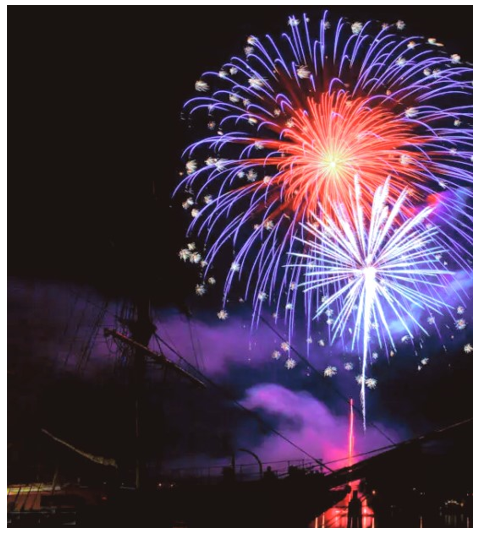
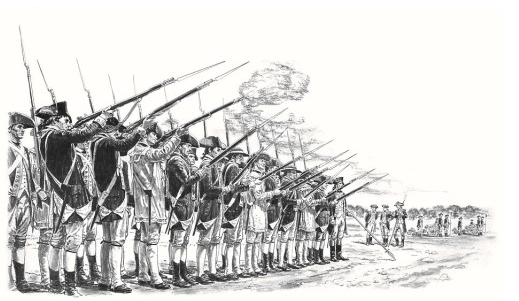

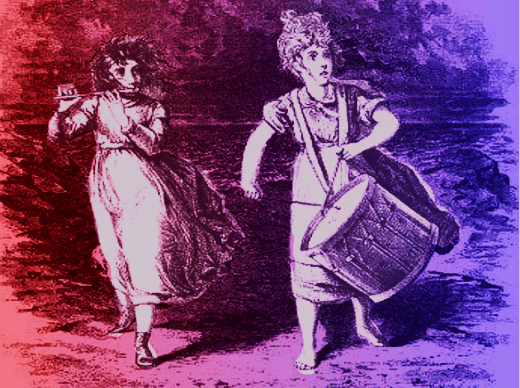


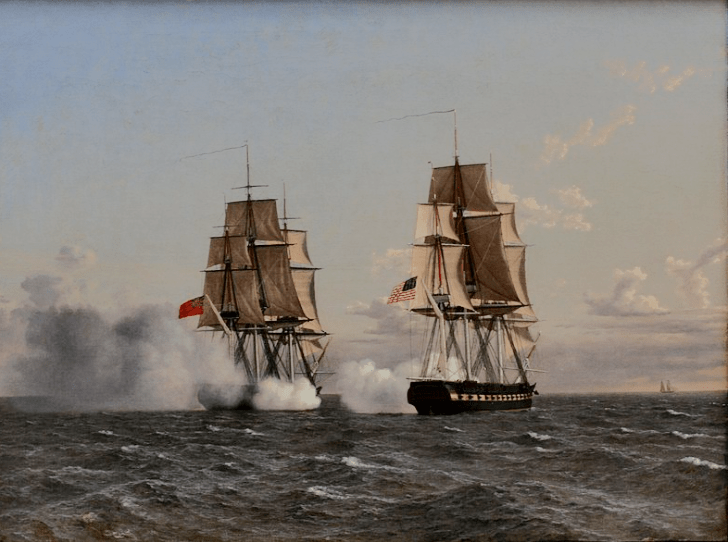

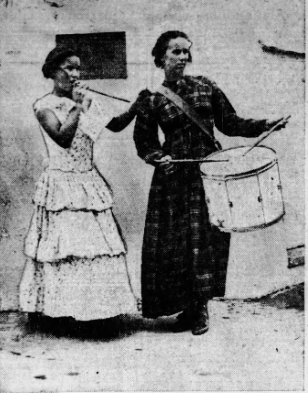

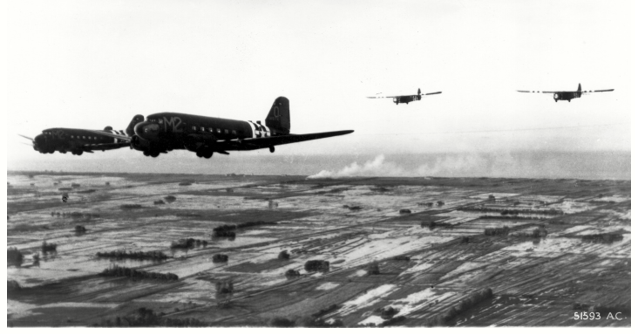

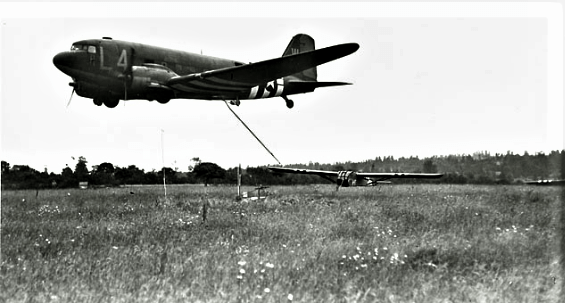


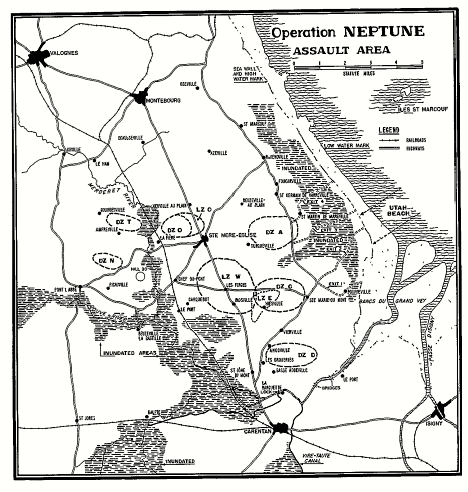

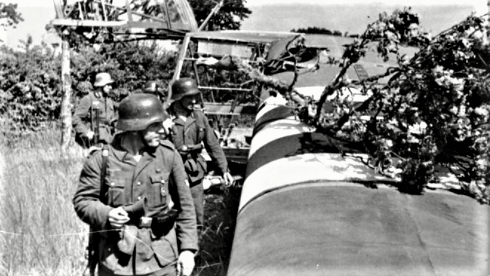

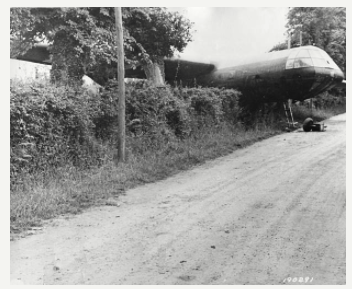
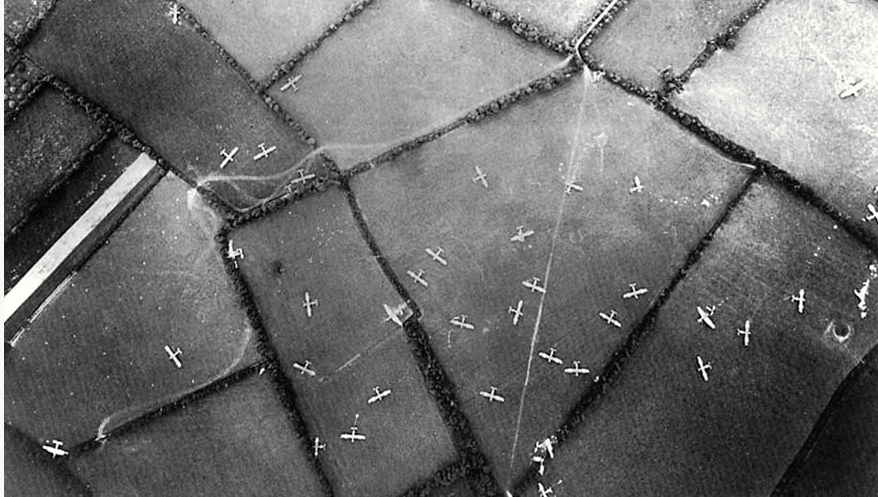
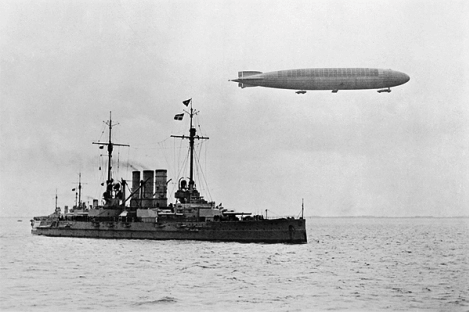
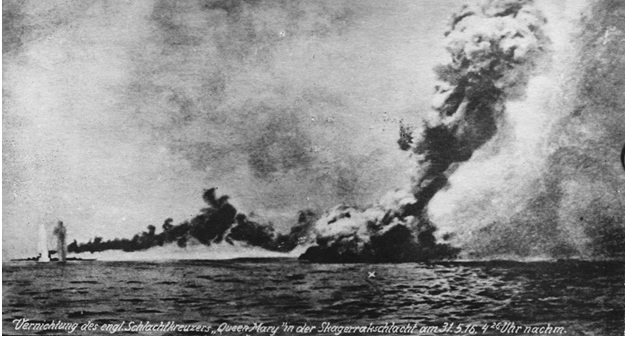
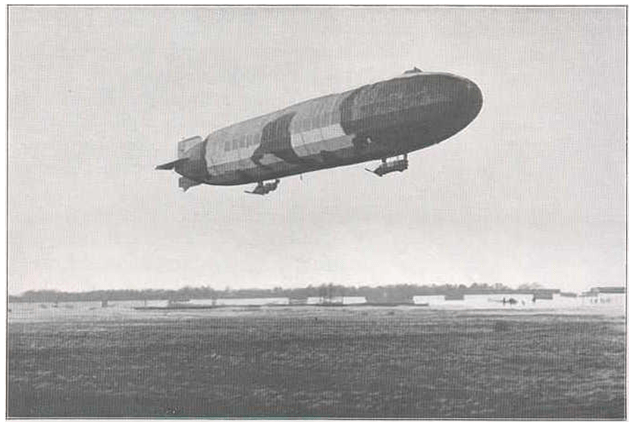
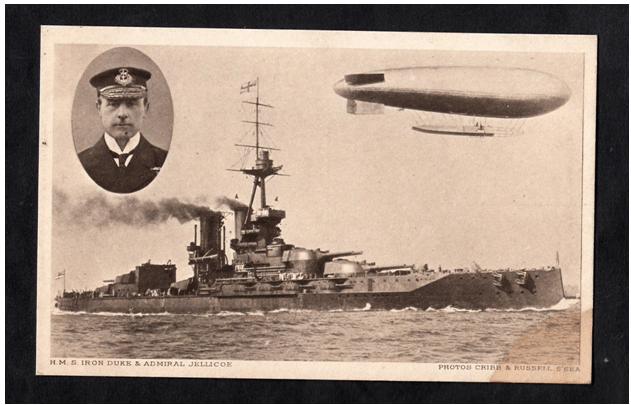


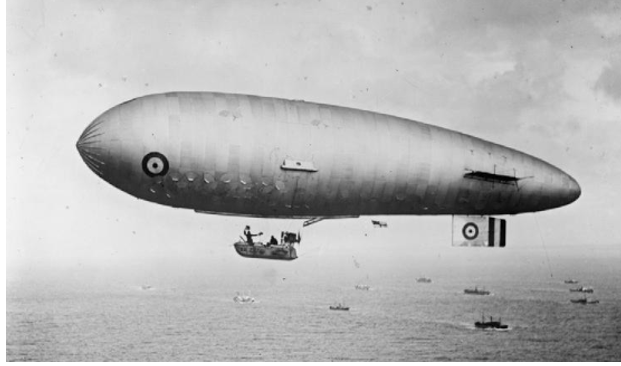
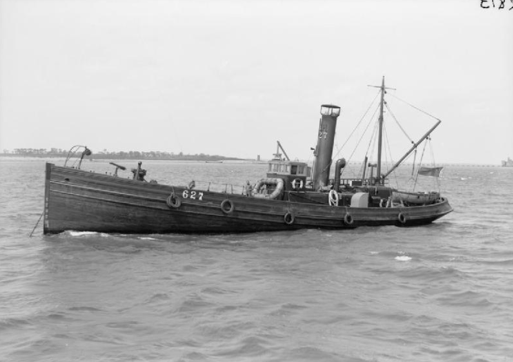


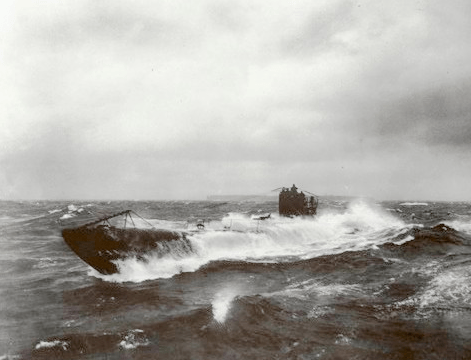
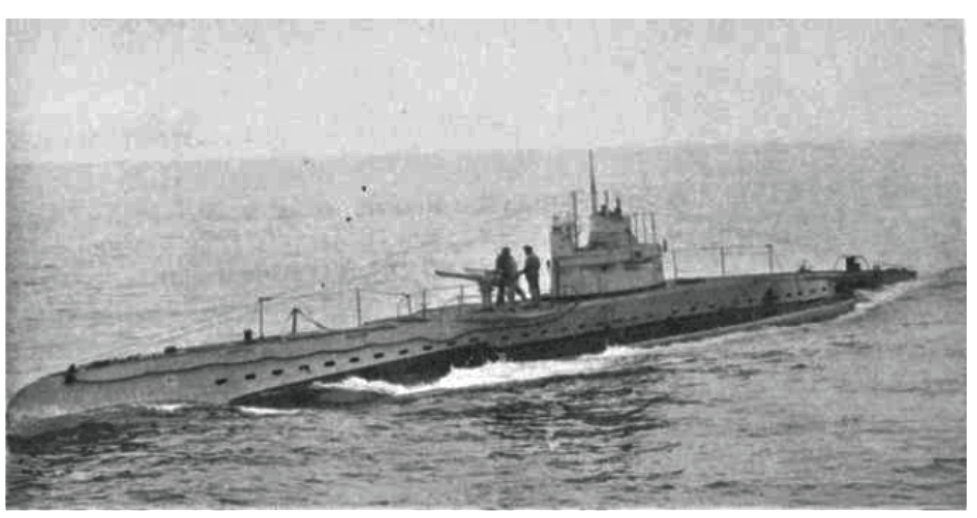

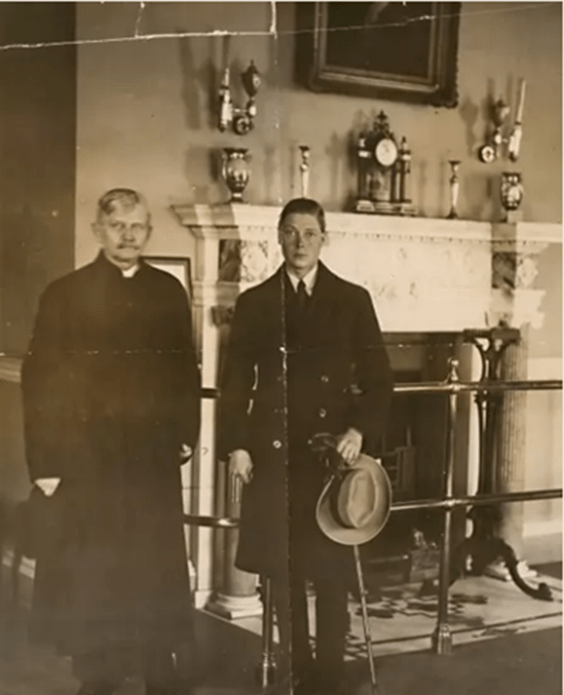

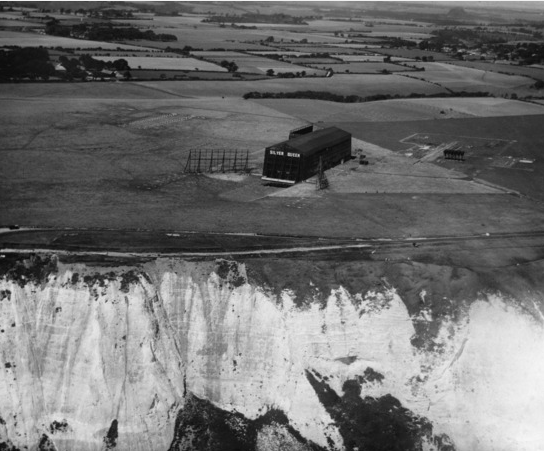
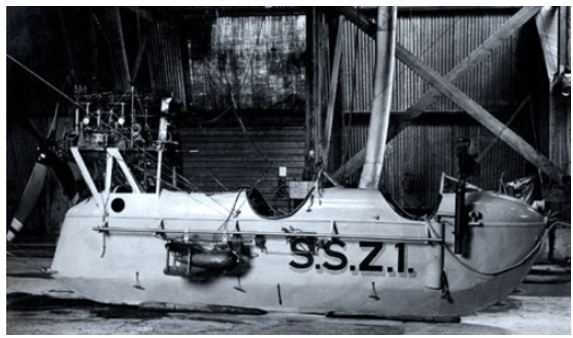
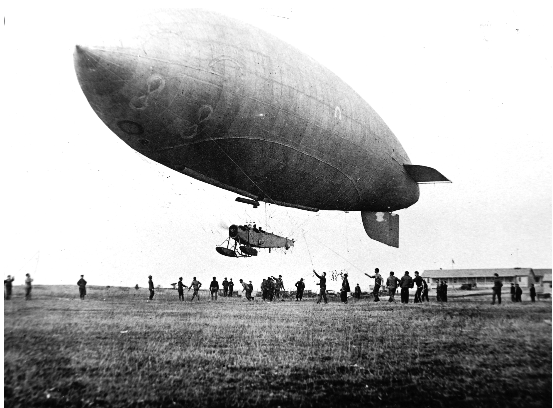
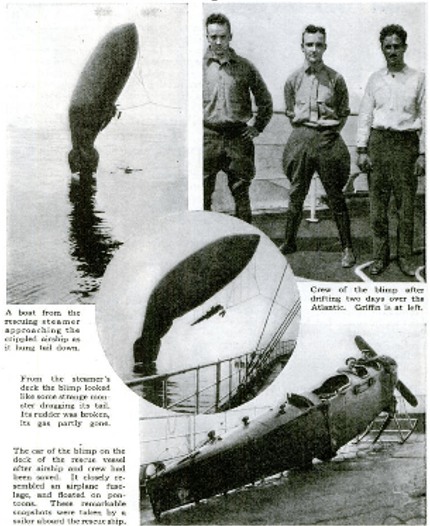
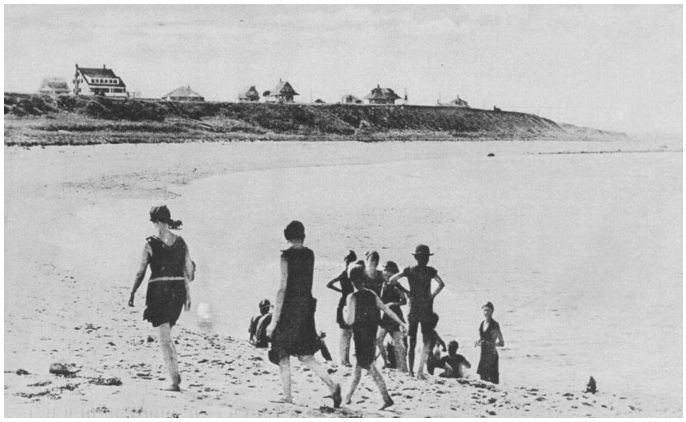
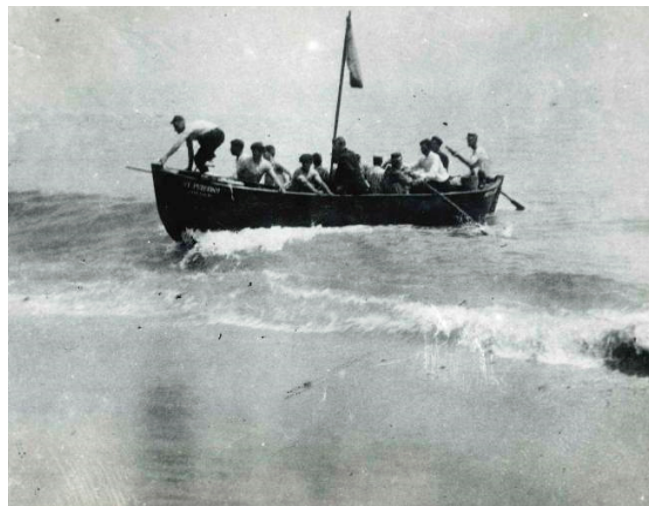
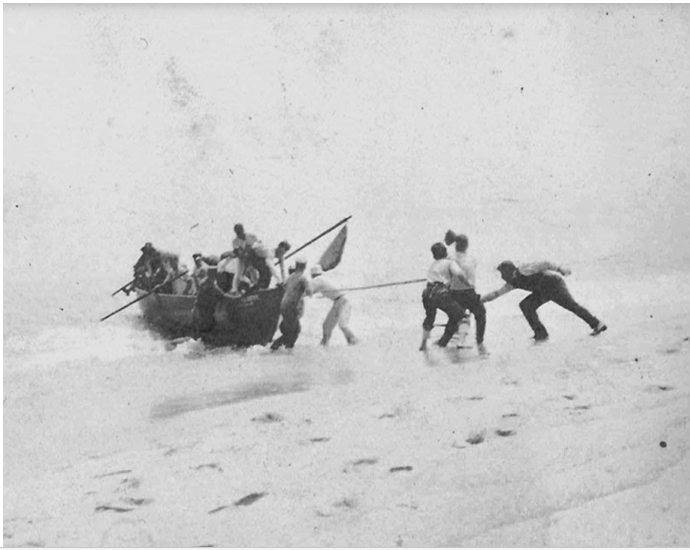
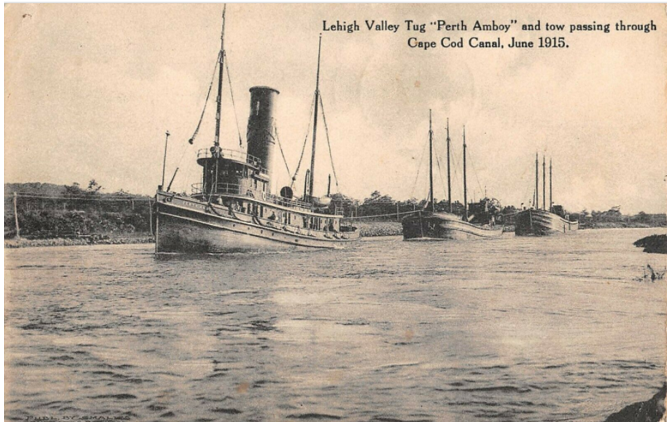
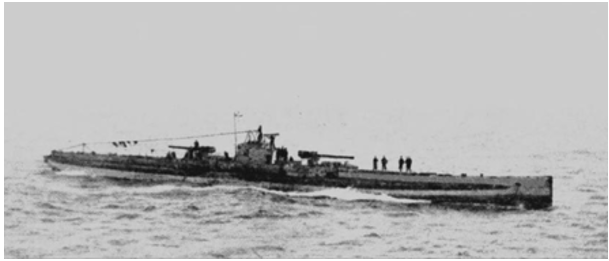
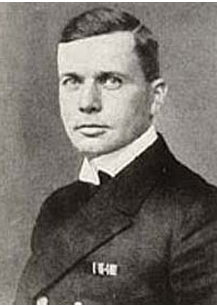
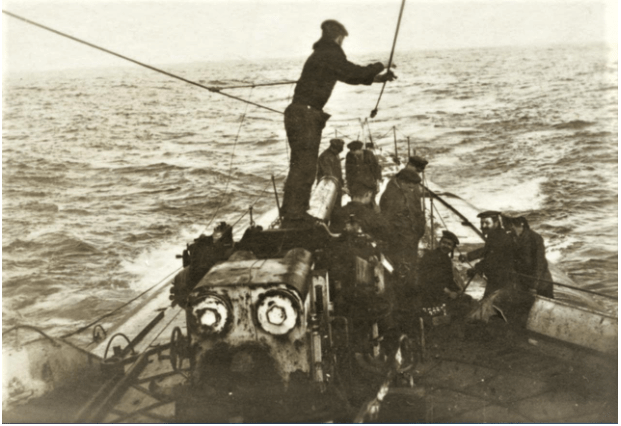
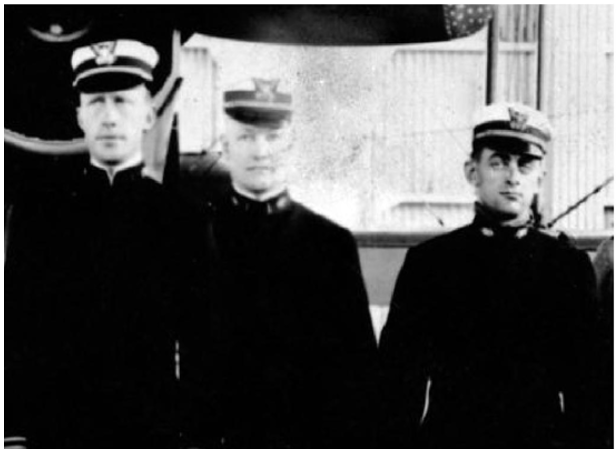
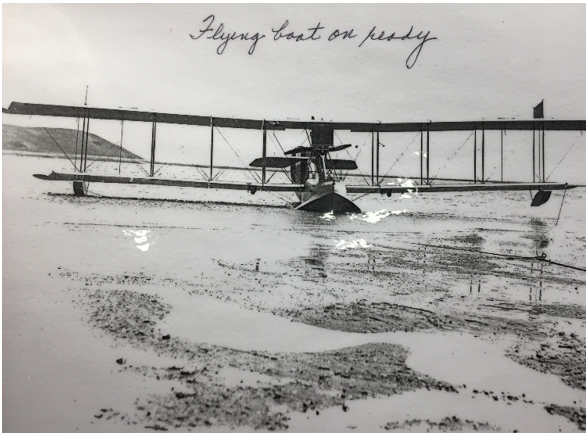
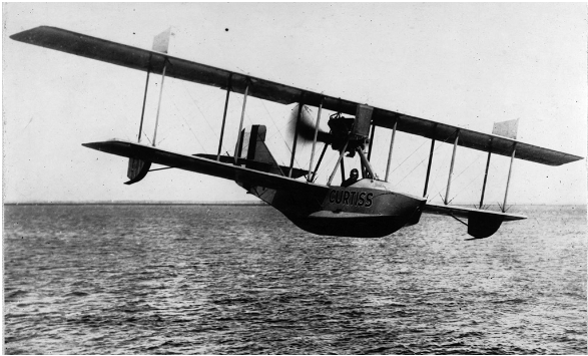
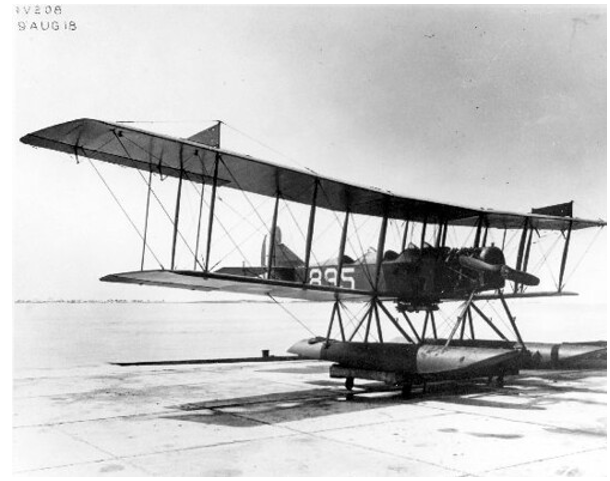
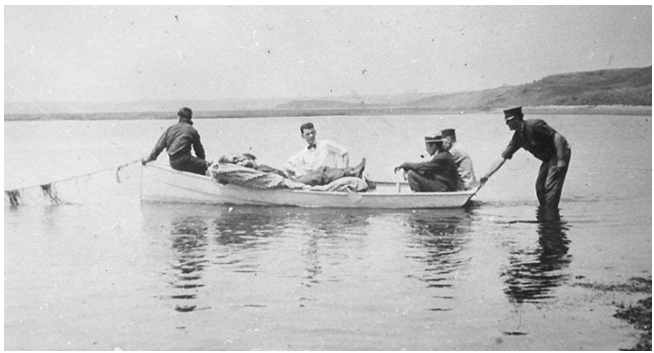
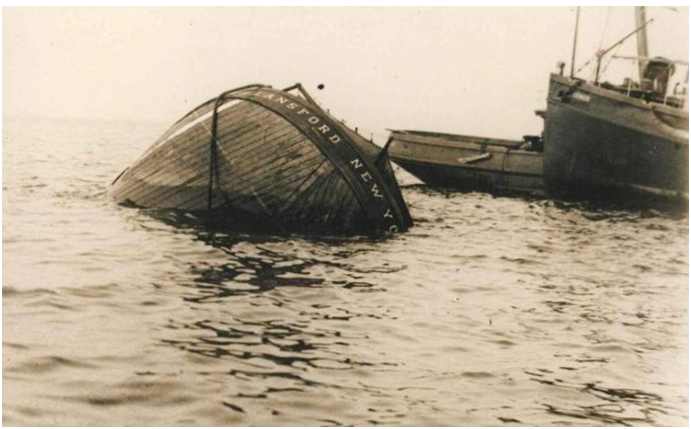
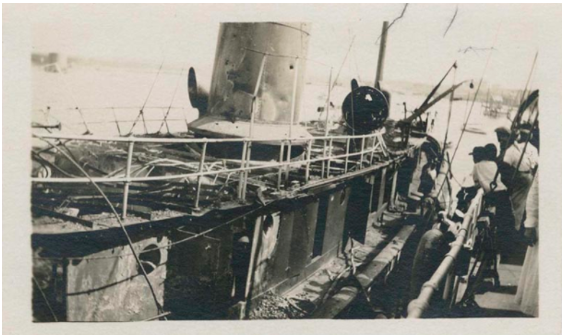
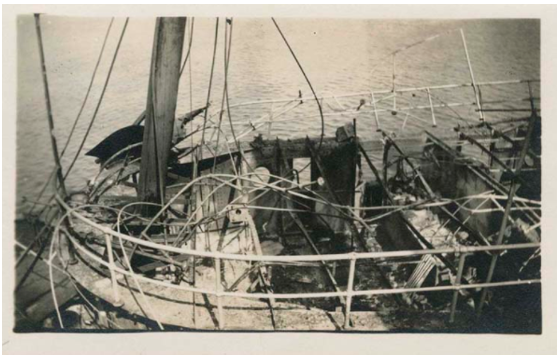
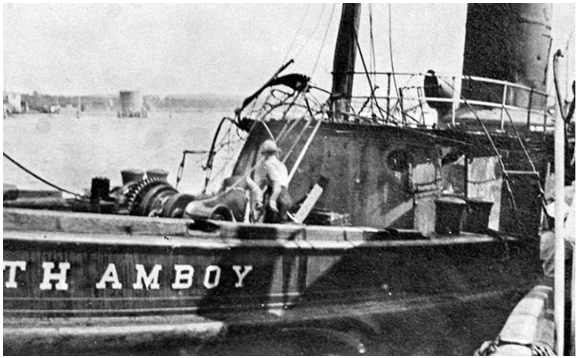
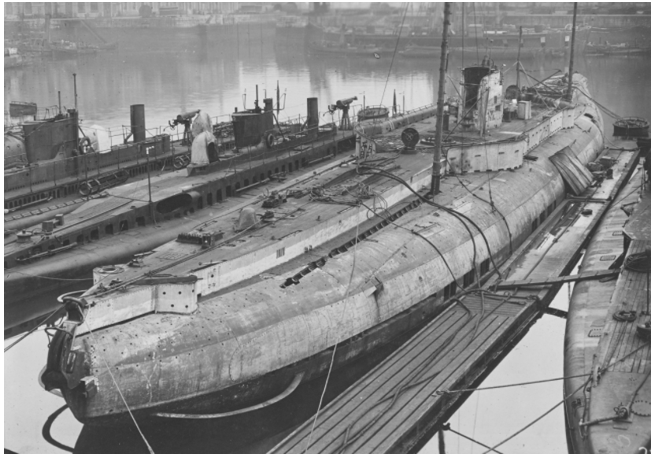
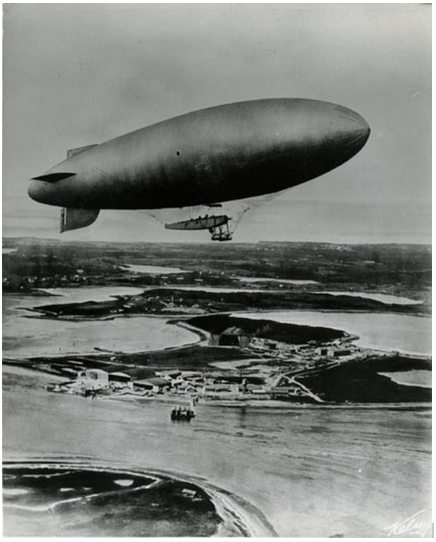

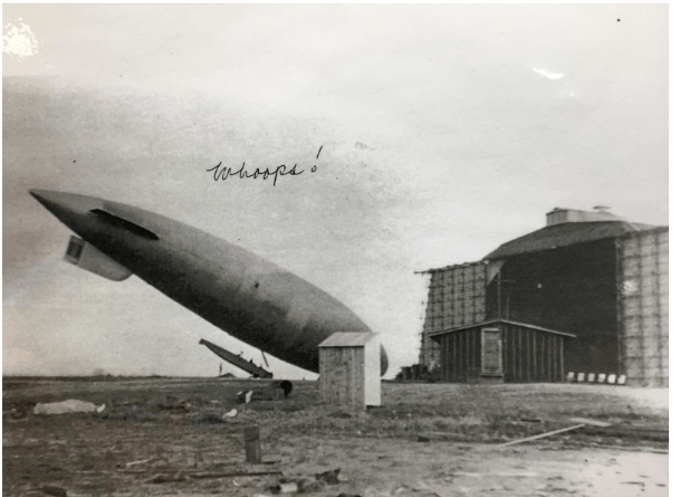
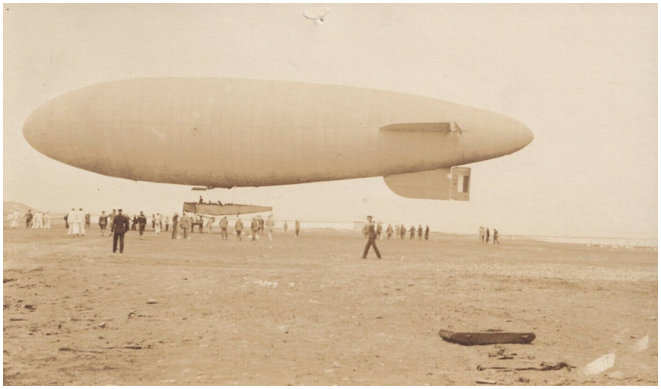
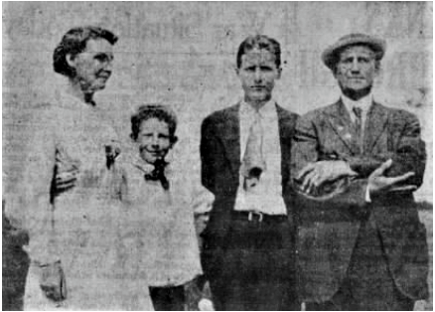
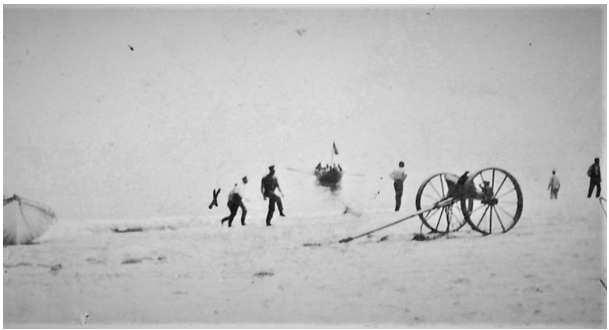
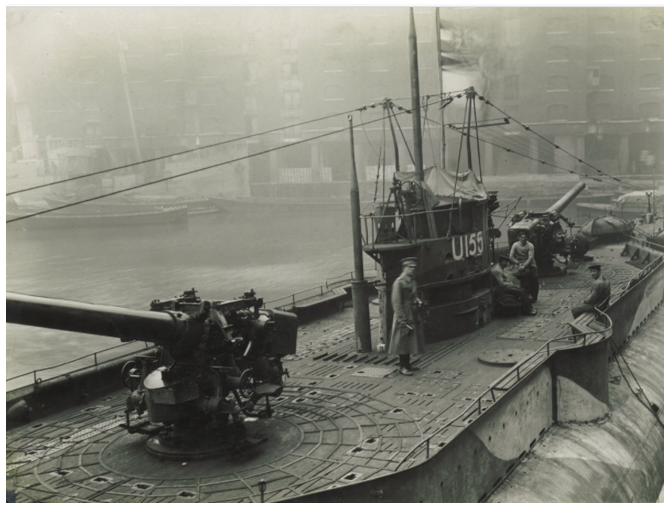

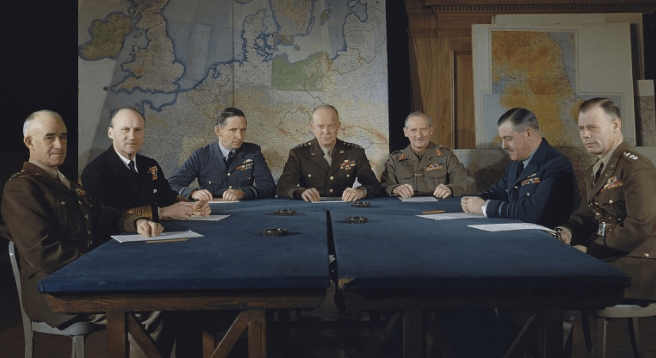

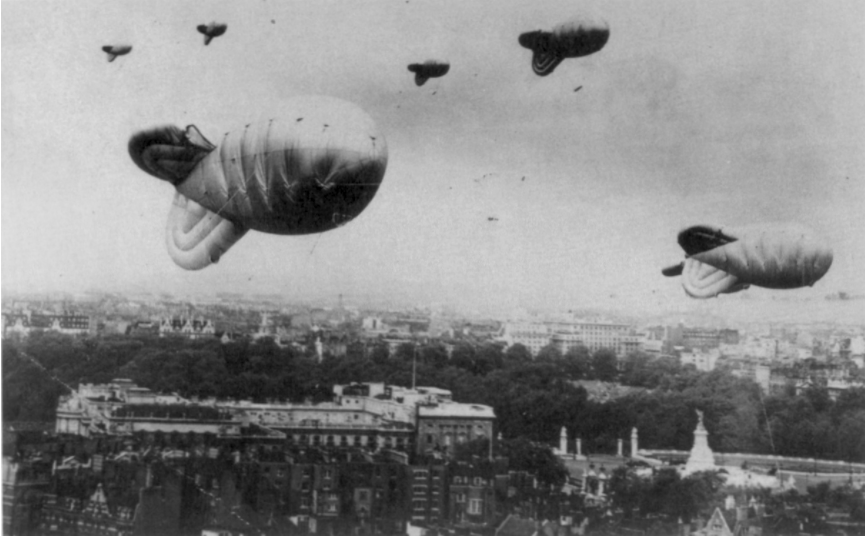








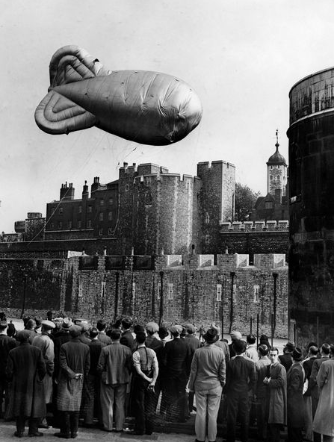
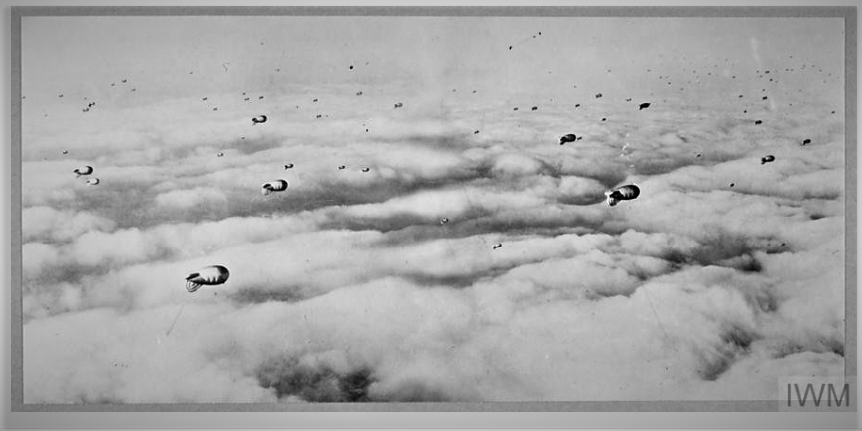


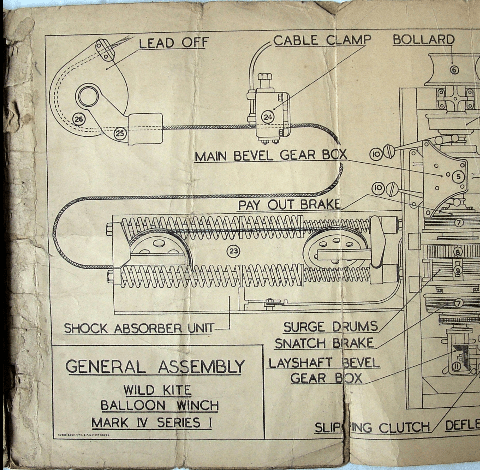
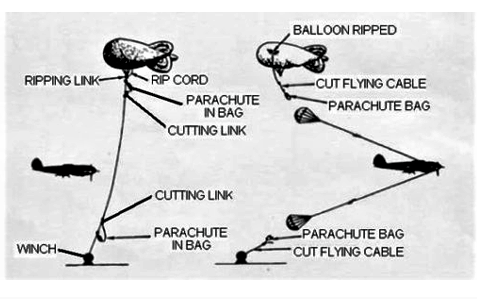




 NauticaSpace Press